Tactical Gear Guides
AI-Driven Military Systems and What They Teach Preppers About Situational Awareness
Verified
Military Trained Staff
Aug 2026
20 min read
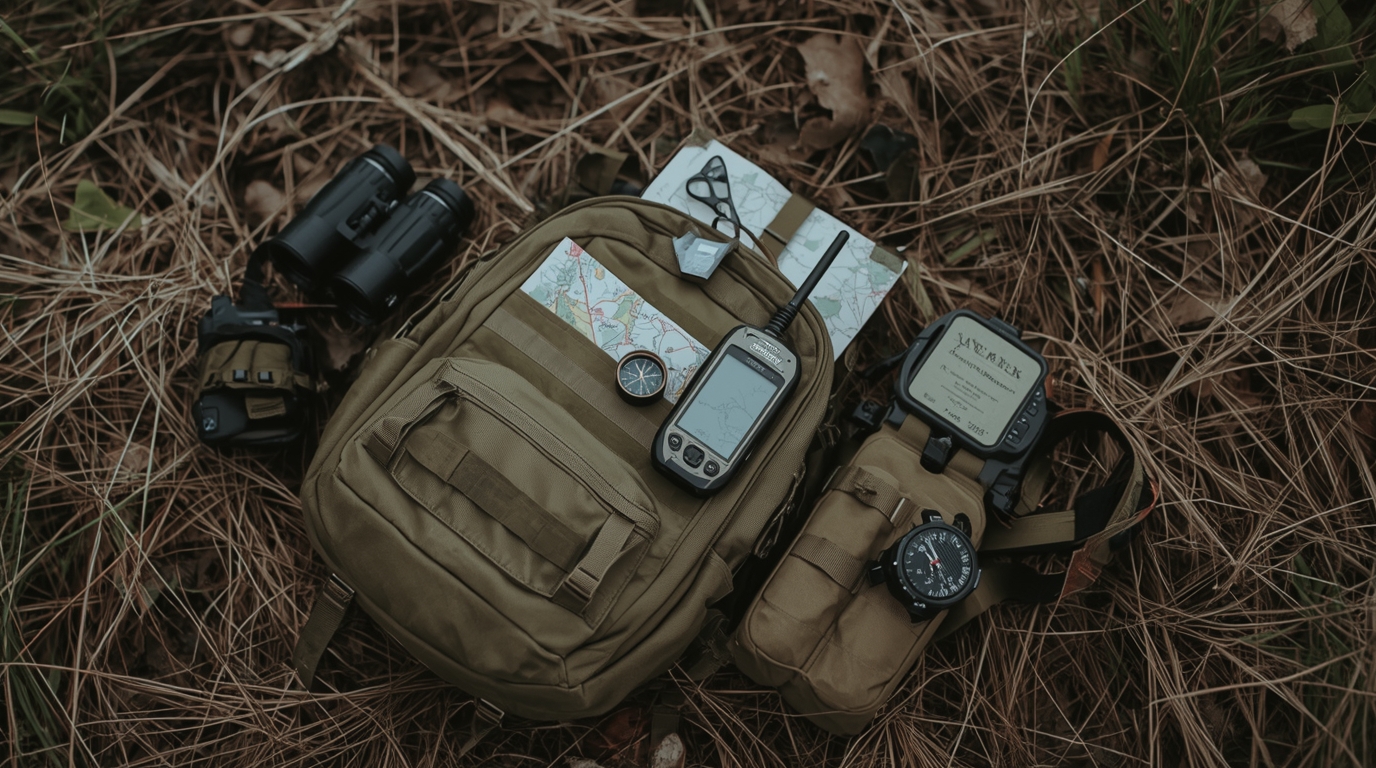
The drone spotted the target before any human did. A sensor package the size of a shoebox, flying at 400 feet, fed real-time imagery into an AI classification system that cross-referenced heat signatures, movement patterns, and object recognition models trained on millions of data points. By the time a human operator received the alert, the system had already assigned a threat probability score, suggested an engagement window, and logged the event to a shared tactical network.
This is not a scene from a speculative thriller. Variants of this technology are operational today — in Ukraine, in the Middle East, and across multiple active conflict zones. AI-driven military systems have crossed the threshold from experimental to deployed. For preppers, survivalists, and anyone serious about situational awareness, that shift matters — because the core principles driving military AI are directly applicable to civilian preparedness. Understanding how these systems work gives you a sharper mental model for building your own awareness architecture.
The central insight — military AI solves the same problem as civilian preparedness:
Both domains are trying to answer the same question: how do you maintain accurate situational awareness in a complex, rapidly changing environment with incomplete information?
— Military systems solve it with technology at scale
— Civilian preppers solve it with discipline, tools, and layered protocols
— The underlying architecture is identical
This guide maps military AI principles to civilian preparedness tools — not to replicate military technology, but to apply its architectural logic with accessible equipment.
How AI-Driven Military Systems Actually Work
Most coverage of AI in warfare focuses on the dramatic end — autonomous weapons, Terminator-style scenarios. That framing misses the more important and immediate reality: military AI is primarily an information processing and decision-support tool, not an autonomous killing machine. Understanding what it actually does — and why it does it that way — is where the civilian lessons live.
At its core, an AI-driven military system does three things: it collects data from multiple sensors simultaneously, processes that data faster than any human analyst could, and surfaces actionable intelligence to decision-makers in a compressed timeframe. Each of those three functions has a direct civilian equivalent.
🔭
// Function 1
Sensor Fusion & Data Aggregation
Military battlefield AI aggregates inputs from drones, ground-based cameras, acoustic sensors, signals intelligence, satellite imagery, and human reports — then fuses them into a single coherent operational picture. Project Maven uses machine learning to process thousands of hours of drone footage that no human team could review manually. The system doesn’t make targeting decisions; it structures raw data into intelligence.
Civilian parallel: Layering multiple information sources — weather radio, scanner, social media, physical observation, community network — creates the same redundant, fused picture. Single-source awareness has single-source failure modes. Layered inputs don’t.
🔍
// Function 2
Threat Classification & Pattern Recognition
Once data is aggregated, AI classification models identify meaningful signals in the noise — recognizing a vehicle type from aerial imagery, flagging unusual movement near a perimeter, detecting the acoustic signature of an incoming rocket. Pattern recognition at this scale and speed is where AI outperforms human analysts — not in judgment, but in throughput. The model recognizes; the human decides.
Civilian parallel: Baseline awareness — knowing what normal looks like so that anomalies register immediately. This is a trained human skill, not a technology. Normal traffic patterns, typical neighbor behavior, regular sounds. Deviations become obvious against an established baseline. You are the classification model.
🧠
// Function 3
Decision-Support & Information Triage
Most deployed military AI systems are decision-support tools, not autonomous weapons. They present options, probabilities, and recommendations. A human operator retains authority over lethal action in most doctrinal frameworks. The system’s value is triage — filtering high-priority signals from background noise so human operators aren’t overwhelmed by data they can’t process in time.
Civilian parallel: Personal protocols for information triage during regional emergencies — which sources you check first, in what order, how you validate conflicting reports. Developing and practicing these protocols before a crisis is the civilian equivalent of the AI-assisted filtering military systems provide under pressure.
The Battlefield Principles That Transfer Directly
The gap between military AI and civilian preparedness is smaller than it appears. The underlying logic is identical — and the military has spent decades and billions of dollars optimizing that logic under the highest-pressure conditions imaginable. Four principles transfer directly, require no military technology to implement, and will fundamentally improve any preparedness system that applies them.
🔄
// Principle 1 · Boyd’s OODA Loop
Compress Observe and Orient
Colonel John Boyd’s OODA loop — Observe, Orient, Decide, Act — remains the foundational framework for decision-making under pressure. Military AI is an OODA accelerator. It compresses the Observe and Orient phases dramatically, giving human operators more time to Decide and Act before the situation changes. Decision speed advantage compounds into tactical outcome advantage.
// Your OODA loop is only as fast as your awareness architecture. If you’re relying on one information source, your Orient phase is slow and potentially inaccurate. Layering inputs mirrors the sensor fusion approach and compresses the same two phases — giving you decision lead time over a threat that doesn’t know you’ve already seen it.
🔗
// Principle 2 · Redundant Sensor Networks
Overlap Creates Resilience
Military forward operating bases don’t rely on a single guard at the gate. They use layered detection — electronic perimeter sensors, observation posts, aerial surveillance, and human patrols — each feeding into a shared picture. Redundancy is the operational point. If one layer fails, others compensate. A single point of failure in perimeter security is treated as no security at all.
// Your home, retreat location, or bug-out camp applies the same logic. Motion cameras, driveway alarms, tripwire alerts, and regular physical perimeter walks create overlapping detection coverage. No single system is foolproof — the combination is. Design for layer failure, not perfect individual performance.
📊
// Principle 3 · Baseline and Anomaly Detection
Know Normal to Detect Abnormal
AI threat classification systems are trained on what normal looks like. A vehicle type that deviates from the baseline fleet, a movement pattern inconsistent with the normal activity profile, a thermal signature in an area where no personnel should be — these anomalies only register as significant against an established baseline. Without the baseline, everything is equally ambiguous.
// Spend time establishing baselines for your environment: normal traffic patterns, typical neighbor activity, regular sounds, standard vehicle arrivals. Deviations become obvious against a well-established baseline. Anomaly detection is a trained human skill — it does not require technology. It requires attention over time.
🤝
// Principle 4 · Human Intelligence Remains Primary
Technology Augments, Doesn’t Replace
Military AI is a force multiplier for human intelligence (HUMINT), not a replacement. The most capable military units combine AI-assisted tools with deeply trained organic awareness skills. Soldiers who can read terrain, identify behavioral anomalies, and navigate without GPS are more capable when AI tools are available — because they understand what the tools are reporting and can compensate when they fail.
// No technology replaces a trusted human network. Your neighborhood, community, and mutual aid group are your HUMINT layer. A community that communicates is exponentially more aware than isolated individuals with better gear. Establish check-in schedules, communication protocols, and information-sharing channels with trusted contacts before a crisis requires them.
📻
// Gear · Communications Layer
GMRS/FRS Radios — Redundant Group Communications
Midland GXT1000 · Motorola T800 · Baofeng UV-5R — pre-programmed channels, infrastructure-independent comms
Browse ›
Building Your Three-Layer Situational Awareness Architecture
Military systems don’t rely on a single observation method — they use layered, redundant networks where each layer covers ground that other layers also cover. Your civilian awareness architecture follows the same structure. Three layers, each with a different reach and a different failure mode, creating a combined picture that is more reliable than any single component.
Outermost Layer — Early Detection and Lead Time
- NOAA weather radio: Dedicated receiver for weather alerts, infrastructure disruptions, and SAME-coded county-specific emergency broadcasts — no cellular required
- Emergency alert aggregation: Broadcastify (scanner feeds), PulsePoint (incident alerts), local emergency management apps — real-time developing incident awareness
- Social media signal monitoring: Twitter/X and local Facebook groups frequently surface ground-truth information faster than official channels during active emergencies
- Satellite imagery services: Publicly available satellite imagery (Google Earth real-time layers, Planet Labs) for remote location assessment before committing to a route
// Principle: maximum lead time. This layer tells you something is developing before it affects your immediate environment — giving you the decision window that distinguishes prepared from reactive.
Immediate Physical Environment — Your Sensor Network
- Motion-activated cameras with night vision: Covering all approach vectors to your property — not just the front door. Position for overlap, not just coverage.
- Driveway alert systems: Passive IR sensors that notify of vehicle or foot traffic before it reaches your structure — earlier warning than cameras alone
- Acoustic sensors and mechanical tripwire alerts: Extended perimeter detection for retreats or camping scenarios where electronic power is limited
- Elevated observation points: A second-floor window with a clear sightline into the approach — visual depth that ground-level cameras cannot provide
- Commercial thermal drone (optional): Aerial perimeter assessment, route reconnaissance, and low-visibility observation at consumer price points
// Principle: overlapping coverage. Each sensor should cover ground that another sensor also covers. Gaps in coverage are vulnerabilities — design the network to eliminate them, not minimize them.
Community and Human Network — Your HUMINT Layer
- Trusted neighbor network: Agreed check-in schedules during emergencies and established protocols for sharing information about developing local situations
- Encrypted group messaging: Signal for small groups — end-to-end encrypted, no cellular network required for Wi-Fi-connected communication
- Mutual aid group: A community that communicates is exponentially more aware than isolated individuals with better gear. Relationships built before emergencies function in emergencies.
- Pre-arranged physical signals: Low-tech backup for when digital communication fails — agreed visual signals between neighbors that convey status without electronic dependency
// Principle: human intelligence fills the gaps technology can’t. A trusted neighbor who observes something anomalous and communicates it to you through an established protocol is worth more than any sensor that can’t interpret context.
📷
// Gear · Physical Layer
Motion-Activated Cameras With Night Vision — Perimeter Coverage
Reolink · Arlo Pro · Blink Outdoor — wireless, night vision, mobile alert integration
Browse ›
Military Capability to Civilian Equivalent — Gear That Bridges the Gap
The same technological trends driving military AI capability have pushed high-performance surveillance and communication gear into the consumer market at accessible price points. The gap between military capability and civilian equivalent has never been narrower. Understanding the military application helps you evaluate whether the civilian equivalent is actually solving the same problem — or just borrowing the aesthetic.
| Capability |
Military Application |
Civilian Equivalent |
| // Aerial observation |
Autonomous ISR drones with AI-assisted target classification, persistent loiter, and multi-sensor payloads |
Commercial thermal drones — DJI with thermal payload, Autel EVO II thermal. Route assessment, perimeter survey, low-visibility observation |
| // Perimeter detection |
Electronic sensor networks with overlapping coverage, alert fusion into command displays, and automated anomaly flagging |
Motion cameras + driveway alarms + tripwires — layered overlapping detection that mirrors the redundancy principle without requiring a command network |
| // Communications |
Encrypted tactical radios with frequency hopping, anti-jam capabilities, and mesh networking across units |
GMRS/FRS radios + Signal app — infrastructure-independent voice comms plus end-to-end encrypted messaging for small trusted groups |
| // Navigation |
GPS + inertial navigation systems that function when GPS is jammed, with integrated mapping and route planning |
Handheld GPS + printed topo maps + compass — redundant navigation that functions when cellular and GPS are unavailable. The organic skill is the backup for the device. |
| // Night observation |
Image intensifier NVGs and thermal optics providing full-spectrum nighttime awareness at squad and vehicle level |
Consumer night vision monoculars + FLIR thermal — now accessible at civilian price points. Fundamentally changes what you can observe after dark at camp or a fixed position |
| // Signals awareness |
Electronic warfare monitoring systems that passively detect and locate RF emissions from adversary communications and electronics |
RF scanners + OPSEC protocols — awareness that your devices are observable, plus discipline about which devices are active when. The protocol is more important than the hardware. |
Night vision monoculars deserve special mention. Once exclusively military hardware, consumer-grade devices have dropped significantly in price while improving meaningfully in quality. For anyone serious about low-light situational awareness — whether at a remote camp or a suburban retreat — a quality night vision monocular fundamentally changes what you can observe after dark. Similarly, handheld thermal imaging devices (now available from FLIR and competitors at consumer price points) reveal heat signatures invisible to the naked eye. The same principle that makes thermal imaging valuable on the battlefield — it shows what visible-light sensors miss — applies directly to civilian perimeter security and search scenarios.
👁️
// Gear · Night Observation
Consumer Night Vision Monoculars — Low-Light Awareness
Pulsar Axion · FLIR Scout TK · Sionyx Aurora — thermal and digital NV at civilian price points
Browse ›
Why AI Doesn’t Replace Organic Awareness Skills
Here’s where the military AI story gets genuinely instructive for preppers — and it’s a lesson learned the hard way in active conflicts. AI-driven systems are powerful force multipliers, but they fail in predictable ways. Understanding those failure modes is as important as understanding the capabilities, because the same failure modes apply to any technology-dependent awareness system.
AI systems are brittle outside their training distribution. A model trained to recognize military vehicles in desert terrain may perform poorly in dense urban environments. A drone navigation system optimized for GPS-available conditions becomes unreliable when GPS is jammed — a tactic now commonplace in contested airspace. The capabilities are real; so are the constraints.
Developing organic situational awareness — the skills technology can’t replace
The most resilient military units combine AI-assisted tools with deeply trained human awareness skills. Soldiers who can read terrain, identify behavioral anomalies, and navigate without GPS are more capable — not less — when AI tools are available, because they understand what the tools are reporting and can compensate when those tools fail. The RAND Corporation’s research on human-machine teaming consistently finds that the most effective military AI implementations maintain meaningful human oversight — particularly in high-stakes decisions. Technology should augment judgment, not replace it.
For preppers, this means investing in foundational awareness skills that function without electricity. Land navigation with map and compass. Tracking and sign-reading. Behavioral baseline assessment — the ability to identify when someone’s demeanor or movement pattern is inconsistent with their environment. These skills are the human-layer equivalent of the AI classification models running on military networks. They are slower but more contextually intelligent, they function under any conditions, and they can compensate when the sensors go dark.
Cognitive load reduction is a direct benefit of disciplined awareness protocols. When your observation and information-processing protocols are established and practiced, you spend less mental energy figuring out what to look for and more on interpreting what you find. This is why military units run drills until protocols are automatic. The same discipline applied to personal preparedness — regular practice with your monitoring systems and communication protocols — builds the same cognitive efficiency that AI provides for military operators.
Common Awareness Mistakes Preppers Make
Even well-intentioned preppers fall into predictable traps when building situational awareness systems. These failure modes are documented — they appear in both military after-action reviews and civilian preparedness assessments. Recognizing them before they occur is the same principle as establishing a baseline: you need to know what failure looks like in order to recognize it early.
// Failure Pattern
Single-Source Awareness
Relying on one information source — a police scanner, a single news channel, a neighbor’s report — is fragile in exactly the way military AI redundancy is designed to prevent. A single source can be wrong, delayed, compromised, or simply offline at the moment you need it. Single-source confidence during a crisis is false confidence.
// Correct Protocol
Diversify All Inputs
Build a minimum of three independent information channels covering the same threat space: official broadcasts (NOAA, emergency management), scanner/incident feeds, and community human intelligence. Require two independent sources to agree before treating information as confirmed. Conflicting reports are a signal to investigate, not choose.
// Failure Pattern
Gear Without Protocol
Acquiring drones, cameras, and radios without establishing clear protocols for how and when to use them is the civilian equivalent of deploying military sensors without a command network. The sensors generate data; the protocol turns data into intelligence. Without the protocol, you have expensive equipment that produces noise rather than awareness during exactly the high-stress moments when clarity matters most.
// Correct Protocol
Protocol Before Purchase
For every piece of awareness equipment you add, write down: what triggers its use, what you’re looking for when you use it, how you communicate what you find, and what the response protocol is for each finding. Test the protocol, not just the gear. A worked-through protocol on paper is worth more than unplanned equipment in a crisis.
// Failure Pattern
Neglecting the Baseline
Situational awareness isn’t just about detecting threats — it’s about knowing what normal looks like so that deviations register immediately. Most preppers invest in detection technology without spending equal effort on establishing normal. An anomaly that can’t be recognized as anomalous is invisible regardless of how much sensor coverage you have.
// Correct Protocol
Invest in Baseline Time
Spend deliberate time observing your environment without looking for threats — documenting normal traffic patterns, typical neighbor schedules, regular sounds, standard vehicle arrivals. This is not passive observation; it is active baseline construction. The return on that investment is that genuine anomalies become obvious against it, without requiring any technology to detect them.
// Failure Pattern
Ignoring Your Own Observable Profile
Preppers focus intensely on observing their environment while neglecting that they are themselves observable. Communications, routines, gear, and visible preparations can all be read by others with their own situational awareness systems. The same intelligence-gathering discipline applied outward applies inward — your operational security is the defensive complement to your active awareness.
// Correct Protocol
OPSEC as Awareness Discipline
Apply the same baseline principle to yourself: what does your routine look like to an outside observer? What does your communication pattern reveal? What does your visible preparation signal? Encrypted communications, varied routines, and limiting the visibility of your preparations reduce the information available to potential threats — closing the feedback loop between outward awareness and inward concealment.
Where Military AI Is Heading — and What Preppers Need to Watch
The trajectory of AI-driven military systems points toward capabilities that will further compress decision timelines, expand autonomous action, and change the information balance between those who have awareness systems and those who don’t. Understanding this trajectory matters not just as a tactical consideration, but as a broader societal awareness issue — because these capabilities compound, and the civilian market follows the military by three to five years on every significant technology shift.
🚁
// Emerging Capability
Drone Swarm Operations
Coordinated networks of autonomous drones operating under AI direction — from experimental to operational.
DARPA’s swarm tactics program has been in development for years, and commercial drone swarms are already publicly demonstrated. The implications for surveillance, area denial, and perimeter security are significant and near-term.
Civilian implication: Area awareness changes character when observation comes from coordinated multi-node systems rather than single platforms. Your perimeter security architecture needs to account for simultaneous multi-angle observation, not sequential single-drone passes.
📡
// Emerging Capability
AI-Driven Signals Intelligence
Systems that identify and locate communications sources in near-real-time — matching device fingerprints, correlating transmission patterns, and geolocating emitters faster than any human analyst could. The erosion of communications privacy in contested environments is accelerating. What was previously a concern for high-value targets is becoming relevant at the individual operator level.
Civilian implication: Communications OPSEC discipline — encrypted channels, minimal unnecessary emissions, varied communication timing — becomes more rather than less important as these systems proliferate and their commercial analogs follow.
🌐
// Emerging Capability
Multi-Domain Integration
AI managing seamless information flows across land, sea, air, space, and cyber domains simultaneously — what military doctrine calls multi-domain operations. Each domain’s data enriches every other. The compounding effect of integrated awareness is qualitatively different from the sum of its parts: gaps that exist in any single domain are filled by others.
Civilian implication: The most effective personal preparedness systems apply the same compounding logic — each layer of your awareness architecture makes the others more effective. A thermal camera paired with a community network that can verify what it detects is qualitatively more capable than either alone. Build toward integration, not accumulation.
The lesson from watching military AI develop in real time:
Capability compounds. Each layer of technology makes the others more effective. The same compounding logic applies to your personal preparedness system.
— A thermal camera is more valuable when paired with a community network that can verify what it detects
— A communications protocol is more reliable when it is practiced regularly rather than invented under pressure
— Organic awareness skills make every piece of technology more effective — because you understand what it is telling you
Start with your layers, build your protocols, practice your baselines. Treat your situational awareness system as a living discipline, not a one-time equipment purchase.
// Field Gear · Amazon
Situational Awareness Kit
Equipment for all three awareness layers. Affiliate links support this site at no extra cost to you.
📻
Layer 1 · Digital
NOAA Emergency Radio — Solar + Crank
The outermost awareness layer that operates without cellular or internet. SAME-coded county alerts, AM/FM, and a 5000mAh battery bank in one unit. The foundation of infrastructure-independent early detection.
- Midland ER310 — NOAA + AM/FM + USB out
- Kaito KA500 — solar, crank, multi-band
- Eoxsmile — 5000mAh bank integrated
Browse on Amazon ↗
Search · Amazon.com
📷
Layer 2 · Physical
Motion Cameras — Night Vision, Wireless
Overlapping approach vector coverage with night vision. Deploy for redundant coverage — not single-point monitoring. The physical layer equivalent of military perimeter sensor networks.
- Reolink Argus 3 Pro (solar, wireless)
- Arlo Pro 4 (color night vision)
- Blink Outdoor (long battery, affordable)
Browse on Amazon ↗
Search · Amazon.com
🔔
Layer 2 · Perimeter
Driveway Alert Systems — Extended Perimeter
Passive IR sensors that notify before threats reach camera coverage. Earlier warning than cameras alone. The first-line detection equivalent of military observation post tripwires.
- Guardline GL2000 — 500ft range, weatherproof
- Hosmart 1/4 mile wireless driveway alert
- Dakota Alert DCMA-2500 (professional)
Browse on Amazon ↗
Search · Amazon.com
👁️
Night Observation
Night Vision Monoculars — Consumer Grade
Once exclusively military hardware. Consumer NV monoculars fundamentally change what you can observe after dark at any fixed position. The gap between military and consumer capability has closed significantly.
- Sionyx Aurora Sport (color night vision)
- Pulsar Axion thermal monocular
- AGM Wolf 7 (Gen 1, accessible price)
Browse on Amazon ↗
Search · Amazon.com
📡
Layer 3 · Comms
GMRS/FRS Radios — Group Communication
Infrastructure-independent group communications for the human intelligence layer. Pre-program primary and backup channels before any scenario. The civilian equivalent of encrypted tactical radio nets.
- Midland GXT1000VP4 — 50-channel GMRS
- Motorola T800 — Bluetooth app integration
- Baofeng UV-5R (amateur license required)
Browse on Amazon ↗
Search · Amazon.com
🗺️
Navigation
Handheld GPS + Printed Topo Maps
Redundant navigation that functions when cellular data and GPS signals are unavailable. The device is the primary; the map and compass are the organic backup when the device fails.
- Garmin inReach Mini 2 (two-way + GPS)
- Garmin GPSMAP 67 (standalone topo)
- National Geographic Trails Illustrated maps
Browse on Amazon ↗
Search · Amazon.com
🌡️
Thermal Observation
Handheld Thermal Imaging Devices
Detects heat signatures invisible to visible-light cameras or the naked eye. The same principle that makes thermal imaging valuable on the battlefield applies directly to civilian perimeter security and search scenarios.
- FLIR Scout TK thermal monocular
- Pulsar Axion 2 XG35 thermal
- FLIR One Pro smartphone attachment
Browse on Amazon ↗
Search · Amazon.com
📶
Signals Awareness
RF Scanners — Signals Monitoring
Broadband RF receivers that passively monitor the electromagnetic spectrum — local public safety, emergency services, aviation, and unidentified transmissions. Signals awareness as a situational awareness layer.
- Uniden Bearcat BC125AT (portable)
- RTL-SDR USB dongle + software defined radio
- Whistler WS1040 (digital trunking)
Browse on Amazon ↗
Search · Amazon.com