Bear-Proof Camp Food Storage: Hang Systems, Canister Strategy, and Scent-Control Workflow to Prevent Night Encounters
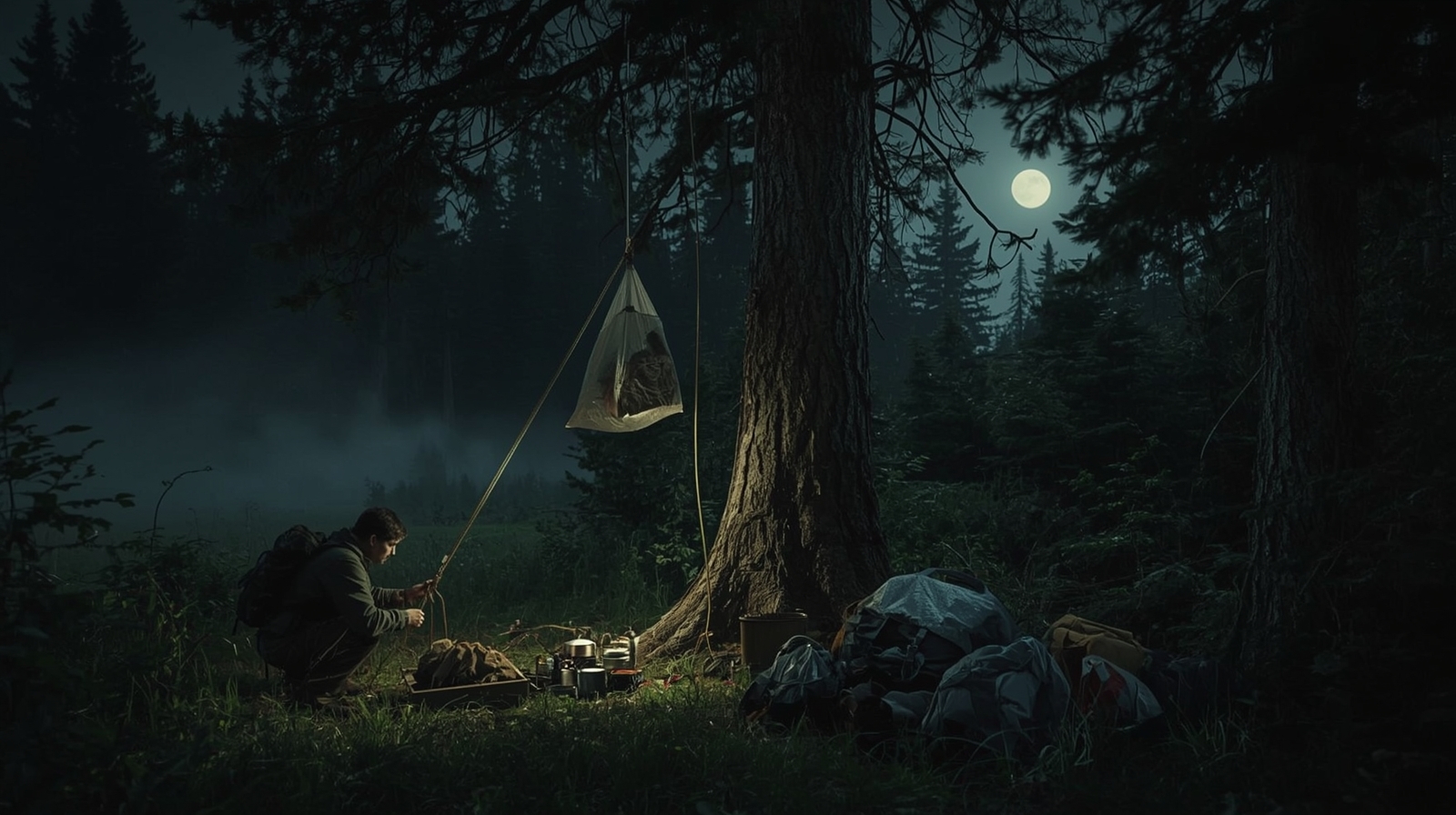
Bears Aren’t “Curious” About Your Tent-They’re Tracking Calories
A bear that wanders into camp at night isn’t looking for conversation. It’s doing what it’s built to do: find dense calories with minimal risk.
Related Articles:
If it gets rewarded once-an unattended cooler at a car camp, a snack bag left in a pack pocket, a pot that wasn’t washed-it learns a simple lesson: camps equal food. That’s how you get repeat offenders, and in many areas, eventually euthanized bears.
The biggest mindset shift is this: you’re not just protecting your dinner. You’re protecting the bear’s behavior pattern. Most night encounters are preventable if you treat food storage and odor control like a standard operating procedure you run every single time.
Food Conditioning Happens Fast
In military training, we talk about conditioning constantly: the behavior you reward is the behavior you get. Bears are no different.
A “minor” mistake-like stashing your trail mix in your tent because it’s raining-can reward a bear enough to create a habit. One win is often all it takes.
Once that habit forms, the bear frequently escalates. First it sniffs around camp. Next it tests packs. Then it starts bluff-charging or staying longer because it expects to win.
Your goal is simple: never provide the first easy win.
Odor Is the Real Problem, Not Just Packaging
People fixate on “bear-proof” containers as if plastic and carbon fiber are magic. But bears don’t need to open your food to be drawn into camp.
They’re following odor plumes:
- Cooking residue on pots
- Spills on clothing
- Crumbs in pockets
- Toothpaste and toiletries
- Trash and wrappers
- Dishwater and food particles
So the real solution is layered. You reduce scent creation, contain what you can’t eliminate, and physically separate attractants from where you sleep.
Know the Rules Where You Travel
Some areas require bear canisters, full stop. Others allow hangs or approved soft-sided systems.
Before you pick your method, read the local land manager’s requirements. Authoritative baseline guidance is available from the National Park Service on storing food and scented items in bear country.
It’s worth checking before every trip because regulations and problem areas change. With bears, “last year’s rules” can get you fined-or worse, get a bear rewarded.
Camp Layout That Makes Food Storage Easier (Not Harder)
If your camp layout is sloppy, your food storage plan gets sloppy right along with it. A disciplined layout makes it easier to do the right thing when you’re tired, wet, or dealing with wind.
Think in triangles and distance. Your sleeping area, cooking area, and food storage area should be separated so a bear investigating odor doesn’t walk straight through your shelter line.
This section matters because the best hang or canister plan still fails if you keep generating odor right next to where you sleep.
The “Triangle” Setup You Can Actually Use
The classic triangle concept is simple: sleep, cook, store-each point separated by distance. In thick woods, you may not get perfect geometry, but you can still create real separation.
A practical standard is 100 yards (or more) between each point when terrain allows. If you can’t get that far because of steep slopes, blowdown, or limited flat spots, don’t force it.
Instead, prioritize two rules:
- Keep food storage downwind of your sleeping area.
- Keep food storage out of the travel line between your kitchen and your tent.
Wind, Drainages, and Natural Funnels
Odor moves, and it doesn’t move evenly. Cold air drains downhill at night, which means your “downwind” choice can flip after sunset.
If you’re camped above a creek or drainage, your scent can slide downhill like water. That’s one reason bears often cruise drainages at night.
Use your nose and your observation. If you smell your own cooking strongly in the tent area, you’re either too close or poorly positioned. Shift the kitchen, move the storage, or both.
Don’t Let Convenience Win After Dark
Most bad decisions happen at the end of the day. You’re cold, your headlamp is dying, and the idea of walking 100 yards feels like work.
Build a routine that doesn’t depend on motivation. Stage your storage gear early, pick the canister spot or hang tree before cooking, and commit to a final sweep before you zip the tent.
Once you do this a few times, it stops feeling like extra effort. It becomes the default.
Bear Hang Systems That Work: Rigging, Tree Selection, and the PCT Method
A bear hang is not “tie a rope to a branch and hope.” Done wrong, it’s a training aid for bears.
Done right, it’s a viable option in areas where hangs are permitted and trees cooperate. The hang has two jobs: keep food out of reach and keep it from being pulled down or chewed through.
That means height, distance from the trunk, and a setup that resists tampering. If you can’t meet those requirements, don’t gamble-switch methods.
Tree and Branch Selection (The Part Most People Get Wrong)
Your ideal branch is high, strong, and extends far enough from the trunk that the bag can hang away from it. You’re looking for a branch 18-25 feet up, with a clean drop and no nearby “stepping” branches.
A workable target geometry is:
- Food bag bottom 12 feet off the ground
- At least 6 feet below the branch
- At least 6 feet from the trunk
In a lot of real forests, that’s hard. If you can’t meet it, don’t fake it-switch to a canister or move camps.
Use a throw bag or a rock in a stuff sack, and take your time. If your line saws through bark, you’re on a branch that’s too small, you’re using the wrong cord, or you’re pulling at a bad angle.
The PCT Hang: Simple, Strong, Harder to Defeat
The PCT hang uses a single line over the branch, a carabiner on the food bag, and a stick toggle that keeps the bag suspended without a low “pull line” a bear can grab.
It’s not complicated, but you have to practice it before you need it. When you’re trying to rig in the dark, in wind, with cold hands, “simple” gets hard fast.
Basic steps:
- Toss your line over the branch and pull both ends down.
- Clip the food bag to a carabiner on the working end.
- Hoist the bag up toward the branch.
- Tie a slippery hitch to hold tension.
- Insert a stick toggle, then lower the bag until the toggle jams against the carabiner.
- Tuck the free end away so it can’t be pulled.
If you want to tighten your rope handling and anchors, the principles overlap with hauling systems and safe rigging in our breakdown of rope systems and mechanical advantage in the field.
Cordage, Hardware, and Common Hang Failures
Use slick, high-strength cord (2-3 mm UHMWPE/Dyneema is common) so it doesn’t bite into bark and it throws clean. Paracord works, but it stretches, tangles, and abrades.
Common failures you can prevent:
- Branch snap: You chose a dead limb or too small a diameter.
- Abrasion: Your cord is sawing bark because you’re yanking sideways.
- Low pull line: You left a tail dangling, basically giving a bear a handle.
- Bag contact: The bag rests against the trunk or a lower branch.
Quick check before you walk away: Can a bear reach it from the ground? Can it reach it from the trunk? Can it grab any hanging line? If any answer is “maybe,” fix it now.
Bear Canister Strategy: Selection, Packing, and Placement That Prevents Loss
If there’s one method that’s consistent across different terrain, it’s the hard-sided bear-resistant canister. It’s not the lightest option, and it’s not always fun to pack, but it solves the “no good trees” problem immediately.
Canisters also reduce decision fatigue. When you’re smoked after a long day, a canister gives you a straightforward end-of-day workflow.
If your hang plan depends on finding the perfect tree every night, a canister can be the more reliable choice.
Choosing a Canister Without Guessing
Start with capacity and local rules. Some parks require specific approved models. Others allow any IGBC-certified container.
The Interagency Grizzly Bear Committee (IGBC) is a solid reference point for understanding certification and why some designs are accepted.
Pick a size that matches your trip length and appetite. A common mistake is buying a small canister and then carrying “overflow food” in your pack, which defeats the point.
Packing Method: Don’t Create a Scent Bomb
Pack by day and by use. Put tonight’s dinner and breakfast on top so you’re not dumping the canister into the dirt each meal.
Rebag noisy packaging and wipe anything that got oily. Small drips turn into big odor.
A simple canister load plan:
- Top layer: Dinner, hot drink, dessert
- Middle: Snacks for tomorrow
- Bottom: Reserve meals and “not today” items
If you use odor barrier bags inside, keep them intact and clean. The canister is the hard shell; the odor bag is the inner discipline.
Placement: Secure, Recoverable, and Not a Bear Bowling Ball
The best canister in the world doesn’t help if a bear rolls it into a ravine.
Place it 100 feet (or more) from camp, downwind, in a depression or among rocks and logs that block rolling. Think “can’t build momentum,” not “can’t reach it.”
Don’t wedge it so tightly that a bear can’t lose interest and leave. And don’t stage it on a cliff edge.
A bear doesn’t need to “open” it to ruin your trip-it can relocate it. A good standard is flat ground, natural barriers on at least two sides, no steep slope nearby, and not directly next to water.
Soft-Sided Options and Hybrid Setups (Ursack, Odor Bags, and When to Use Them)
Soft-sided bear-resistant bags can be useful in specific contexts, but only if they’re legal where you are and you understand what they do and don’t do.
They’re primarily designed to prevent a bear from getting the food, not to eliminate odor or prevent investigation. That distinction matters when your goal is “no night encounters,” not just “no food loss.”
If you choose soft-sided, your anchoring and odor control have to be tighter.
When Soft-Sided Makes Sense
If you’re moving fast, counting ounces, and traveling in areas with fewer suitable hang trees, a soft-sided system can be a realistic compromise.
It’s also useful where hard-sided canisters aren’t required but bear pressure still exists. The win is packability and weight.
The tradeoff is that you must anchor correctly and accept that the bear may chew, slobber, and crush the contents into paste even if it can’t eat it.
Anchoring and Standoff: Keep It From Becoming a Tug Toy
A soft-sided bag must be tied to a solid anchor point: a stout trunk, a root base, or a rock feature that won’t move.
Avoid skinny saplings that can be bent over or snapped. Also avoid deadfall that looks solid but can shift under load.
Position it off the ground if allowed by manufacturer guidance, but prioritize a tight tie and minimal slack. Slack is leverage. Leverage is damage.
Hybrid Workflow: Soft-Sided Plus Odor Control
Soft-sided systems work better when you reduce odor at the source. Use odor barrier bags inside, wipe down packaging, and avoid putting “open food” items (like greasy wrappers) loose in the bag.
If you’re already applying strict hygiene for safe meals, you’re halfway there. Our article on backcountry food safety without refrigeration pairs well with bear prevention because clean workflow also reduces smells and spills.
Scent-Control Workflow: A Repeatable System From Home to Lights Out
The easiest way to fail bear country is to treat odor control as a last-minute chore. Instead, run it as a workflow that starts before you hit the trail.
In the field, your best tool is consistency. Not a miracle spray, not a “bear proof” label-just a system you run the same way every time.
This is where you turn “good intentions” into repeatable actions.
Pre-Trip Repack: Reduce Smell and Mess at the Source
At home, repackage foods into tougher, cleaner bags. Remove cardboard, excess plastic, and anything that leaks odor easily.
Double-bag oily foods. They’re notorious for contaminating everything else.
Also separate categories:
- Food: Meals, snacks, drink mixes
- Scented non-food: Toothpaste, sunscreen, lip balm, wipes
- Trash: A dedicated bag you can seal
This matters because most “bear incidents” in camp aren’t from dinner. They’re from trash and toiletry smells mixing into one constant plume.
In-Camp Handling: Clean Hands, Clean Clothes, Clean Surfaces
When you cook, you’re painting odor onto your hands, sleeves, and knees. That’s normal.
What isn’t normal is taking those same clothes into your sleeping bag. Clothing is basically an odor sponge.
If you’re in heavy bear country, consider a dedicated “kitchen layer” (wind shirt or lightweight top) that stays in the cooking area and gets stored with food items at night. Wipe hands, wipe utensils, and keep your food bag sealed whenever you’re not actively pulling something out.
Odor Barriers and Reality
Odor barrier bags help, especially for reducing incidental scent, but they’re not a force field.
If you smear peanut butter on the outside, it’s done. If you leave it open while you cook, it’s done.
Use them like you’d use waterproofing: one layer in a system. Your real advantage comes from limiting spills, sealing consistently, and never bringing smellables into the tent.
Cooking and Cleanup Discipline That Stops
This is where most camps get loud-odor-wise. Even if your food is stored correctly at night, a sloppy kitchen routine can keep bears circling your area for hours.
Treat cooking and cleanup like you’re trying to leave no evidence a meal happened. That doesn’t mean paranoia. It means being methodical and not cutting corners when you’re tired.
If you dial in your kitchen discipline, everything else (hangs, canisters, and scent control) gets easier to execute.