Cold-Weather Sleep Systems Without a Subzero Bag: Layering Strategy, Vapor Barriers, Ground Insulation, and Condensation Control
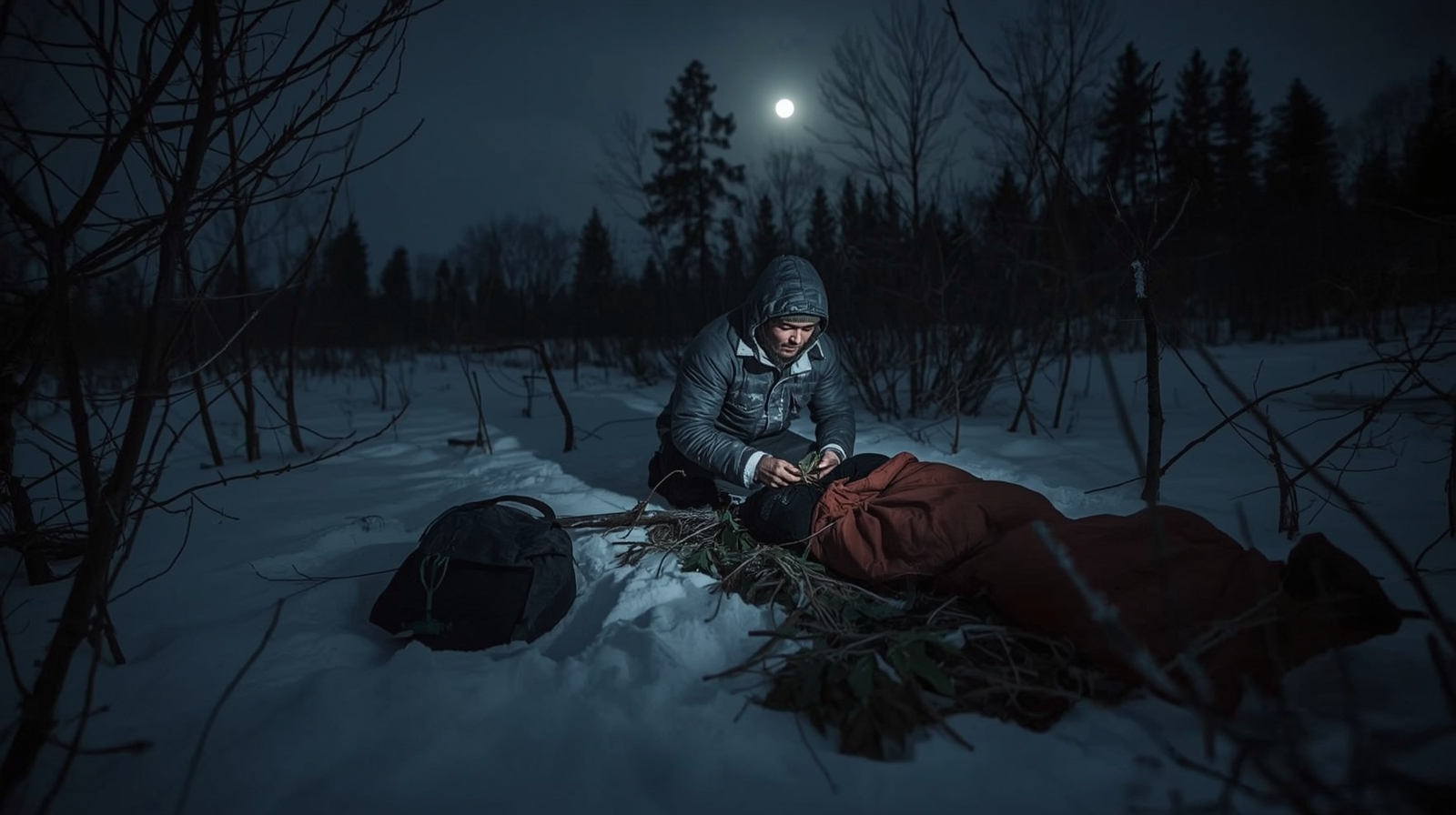
Temperature Reality Check: Why “Warm Enough” Sleep Systems Fail in the 20s
Cold-weather sleep systems fail for predictable reasons. It’s rarely because you didn’t buy an expensive enough bag.
Related Articles:
Most failures come from heat loss to the ground, moisture building up in insulation, and small setup mistakes that compound at 2 a.m. When I was training in cold environments, we treated sleep like mission prep: you don’t hope it works, you build it in layers and verify it.
Before you start stacking bags and wearing more clothes, get clear on what you’re fighting. Your body produces heat, but you lose it through:
- Conduction (ground contact)
- Convection (wind and air leaks)
- Radiation (less important, but real)
- Evaporation (sweat)
The “feel” of the cold is also affected by wind chill. If you’re curious how wind changes exposure risk, the National Weather Service chart is a solid reference: NWS wind chill information.
If you remember one thing, make it this: if your pad setup is weak and your insulation is getting damp, no amount of “toughness” fixes the physics. The good news is you can build a subzero-capable system with non-subzero gear when you control those two problems.
Use a Heat-Budget Mindset Instead of a Gear-Rating Mindset
Think of warmth like a budget you can spend and lose. You’re constantly making deposits and withdrawals, whether you realize it or not.
Here’s the simple breakdown:
- You earn heat by eating, moving, and maintaining hydration.
- You save heat by trapping still air in loft and blocking drafts.
- You bleed heat through the ground and through wet insulation.
A 20-degree sleeping bag can feel like a 40-degree bag if you’re on a low-R pad and wearing damp base layers. The same bag can feel dramatically warmer if you stack pads correctly and keep insulation dry.
That’s why two people with the same bag can have wildly different nights. Your goal isn’t to find a magic item. It’s to stop the biggest leaks first, then fine-tune the rest.
Site and Shelter Choices Decide Your Starting Conditions
Where you sleep sets the baseline. A windy saddle, a damp low spot, or a site under a snow-loaded widowmaker all increases your problem set.
You don’t need perfection, but you do need intent. Aim for:
- Wind protection (natural breaks, terrain features, smart shelter orientation)
- Drainage (avoid low points where cold air pools and meltwater runs)
- Safe overhead clearance (no dead limbs, no loaded branches)
Even minor wind finding its way under a tarp edge can strip warmth fast, especially if you’re using quilts or layering loose insulation.
If you want a structured approach to choosing a winter camp location, use the same priorities outlined in shelter site selection and camp layout. In cold conditions, “good enough” site selection is often the difference between sleeping and surviving the night.
Know the Two Quiet Warning Signs: Sweat and Pressure Points
In the cold, you can be losing warmth while feeling “fine” early. Two warning signs usually appear before you start shivering hard:
- You’re sweating inside your insulation.
- You’re getting cold at pressure points (hips, shoulders, heels).
Sweat is dangerous because it turns insulation into a damp sponge over multiple nights. Pressure-point cold usually means you’re compressing loft or your pad stack isn’t insulating enough.
Both problems are fixable, but only if you catch them early. A reliable routine is a quick pre-sleep check: dry base layer, warm feet, pad aligned, drafts blocked. That 30-second check prevents the 2 a.m. spiral.
Transitioning from theory to practice, the next step is building layers that trap heat without turning your sleep system into a sweaty, compressed mess.
Layering Strategy Without Crushing Loft: Bag, Quilt, and Clothing Integration
Layering a sleep system is not the same as putting on every piece of clothing you own. In the field, I learned that “more layers” can actually make you colder when they compress the insulation that’s supposed to trap air.
The goal is to create a controlled microclimate around your body: warm, dry-ish, and draft-free. That “dry-ish” part matters. Winter comfort is as much about moisture management as it is raw insulation.
Start with what you already have:
- A 20-30°F sleeping bag
- A lightweight quilt or blanket
- Clothing layers you can adjust
Then build the system so you can vent easily. Venting matters because overheating leads to sweat, and sweat leads to cold.
A simple rule works well: insulation closest to your body should manage moisture and feel comfortable. Insulation farther out should maximize loft and block drafts. Clothing is the fine adjustment, not the main heater.
If you’re upgrading gear over time, it helps to browse sleep-related items by function rather than hype. The site’s backpacking category is a clean way to think in “systems” (sleep, shelter, cook) instead of chasing one hero item.
The Two-Layer Sleep Sandwich: Bag Inside, Quilt Outside
The most reliable non-subzero setup is a bag plus an over-quilt. Put your regular sleeping bag inside and drape a quilt on top.
If you have one, a synthetic overbag works too. The point is the same: build a second layer that adds warmth without crushing loft.
Why this works:
- The outer layer reduces convective heat loss.
- It traps more still air without compressing your bag.
- It helps manage moisture migration (condensation often forms in the cold outer layer).
If you only have one “extra” insulation piece, prioritize a quilt or blanket that is easy to vent. Being able to peel it back when you start sweating is more valuable than adding a tight layer that locks moisture in.
Sleep Clothing: Warmth Control, Not a Replacement for Loft
Dedicated sleep clothing is a winter cheat code. It’s not about being fashionable; it’s about staying dry.
Ideally, you have a base layer top and bottom that never gets worn during the day. That way, you’re not crawling into your bag wearing sweat from the afternoon climb.
If you must wear insulation to bed, focus on keeping circulation open. Tight socks, tight waistbands, and compressed puffy jackets can reduce blood flow and create cold spots.
When you’re borderline cold, add insulation in this order:
- Head/neck (hat, balaclava, buff)
- Feet (dry socks, vapor barrier if appropriate later)
- Core (puffy, extra layer)
Don’t start by piling bulky layers under your torso where your body weight crushes them. If the loft is flattened, it’s mostly dead weight.
Draft Control: The Small Gaps That Wreck Big Gear
Drafts are the silent killer of layered systems, especially with quilts. Fix drafts before you assume you need more insulation.
If you’re using a quilt, secure the edges under you or use pad straps so the quilt moves with you. In a bag-plus-quilt combo, make sure the quilt doesn’t “bridge” over your body and leave air gaps.
Those gaps become cold air channels when you roll. They feel minor at bedtime, then wake you up later.
A practical trick is to use a thin fleece or wind shirt as a draft collar around your shoulders inside the bag. It’s not glamorous, but it blocks the chimney effect when you move.
Now that your top-side insulation is organized, it’s time to address the part most people under-build: what’s underneath you.
Ground Insulation Wins Winter: R-Values, Pad Stacking, and Field Options
If you’re cold at your hips and shoulders, you don’t have a bag problem. You have a ground insulation problem.
In freezing conditions, the ground is an infinite heat sink. Conduction will pull warmth out of you all night, even if your bag is excellent.
R-value is the most useful number to understand. Higher R-value means better resistance to heat flow.
A lot of people try to solve winter sleep by buying a warmer bag, then get frustrated because they’re still cold from below. In practice, stacking pads is the fastest way to push a three-season kit into winter.
A closed-cell foam (CCF) pad plus an inflatable pad is a strong combo because CCF keeps insulating even if the inflatable leaks. It also adds structure and protects the inflatable from punctures.
Practical R-Value Targets and a Simple Stacking Rule
For shoulder-season nights around freezing, an R-value around 3-4 can work for many sleepers. For sustained teens and single digits, you often want 5-7, depending on your metabolism and wind exposure.
Stacking is straightforward: R-values add.
- Foam pad at R-2 + inflatable at R-4 ≈ R-6
That’s a major upgrade without buying a dedicated winter pad. It also gives you redundancy. If a valve fails, you still have insulation.
If you’re using a quilt, err on the higher side because your underside insulation is already compromised by compression. Quilts assume your pad is doing the heavy lifting.
Pad Combination Comparison Table (Realistic, Not Marketing)
Below is a practical way to think about common pad stacks. The exact R-values vary by brand, but the decision logic holds.
| Pad Setup | Warmth Potential | Failure Risk | Weight/Volume | Best Use Case |
|---|---|---|---|---|
| Single 3-season inflatable | Moderate | Medium (puncture/valve) | Low | Dry ground above freezing |
| Single CCF pad | Low-Moderate | Low | Bulky | Minimalism, backups, short trips |
| CCF + 3-season inflatable | High | Low-Medium | Medium | Best all-around winter upgrade |
| Two inflatables stacked | High | Medium-High | Medium-High | When comfort matters and you can manage risk |
| CCF + winter-rated inflatable | Very High | Low-Medium | Medium | Single digits, multi-night trips |
The CCF plus inflatable combo is the field workhorse. It’s tolerant of mistakes, and mistakes happen when it’s dark and cold.
Improvised Ground Insulation When Gear Is Limited
If you’re short on pad insulation, you can supplement with natural materials. Do it correctly, though. You need loft and trapped air, not a wet sponge.
Dry spruce boughs, dead grasses, or pine needles can add meaningful insulation under a groundsheet. Build it thick enough that you don’t bottom out onto frozen soil.
A quick test: lie down for a minute. If it compresses flat and you feel the cold “printing” through, it’s not doing much.
In snow, pack a platform first. Loose snow melts under you, then refreezes into an uneven, cold bowl. A firm platform keeps your pad flat and reduces heat loss.
From here, you’ve handled the biggest heat leak (the ground). The next improvements come from moisture and condensation control, which is where many multi-night winter trips fall apart.