Home
/
Blog
/
Military Wearable Technology and What It Means for Every Tactical Jacket You Buy
Blog
Military Wearable Technology and What It Means for Every Tactical Jacket You Buy
Verified
Military Trained Staff
Apr 2026
18 min read
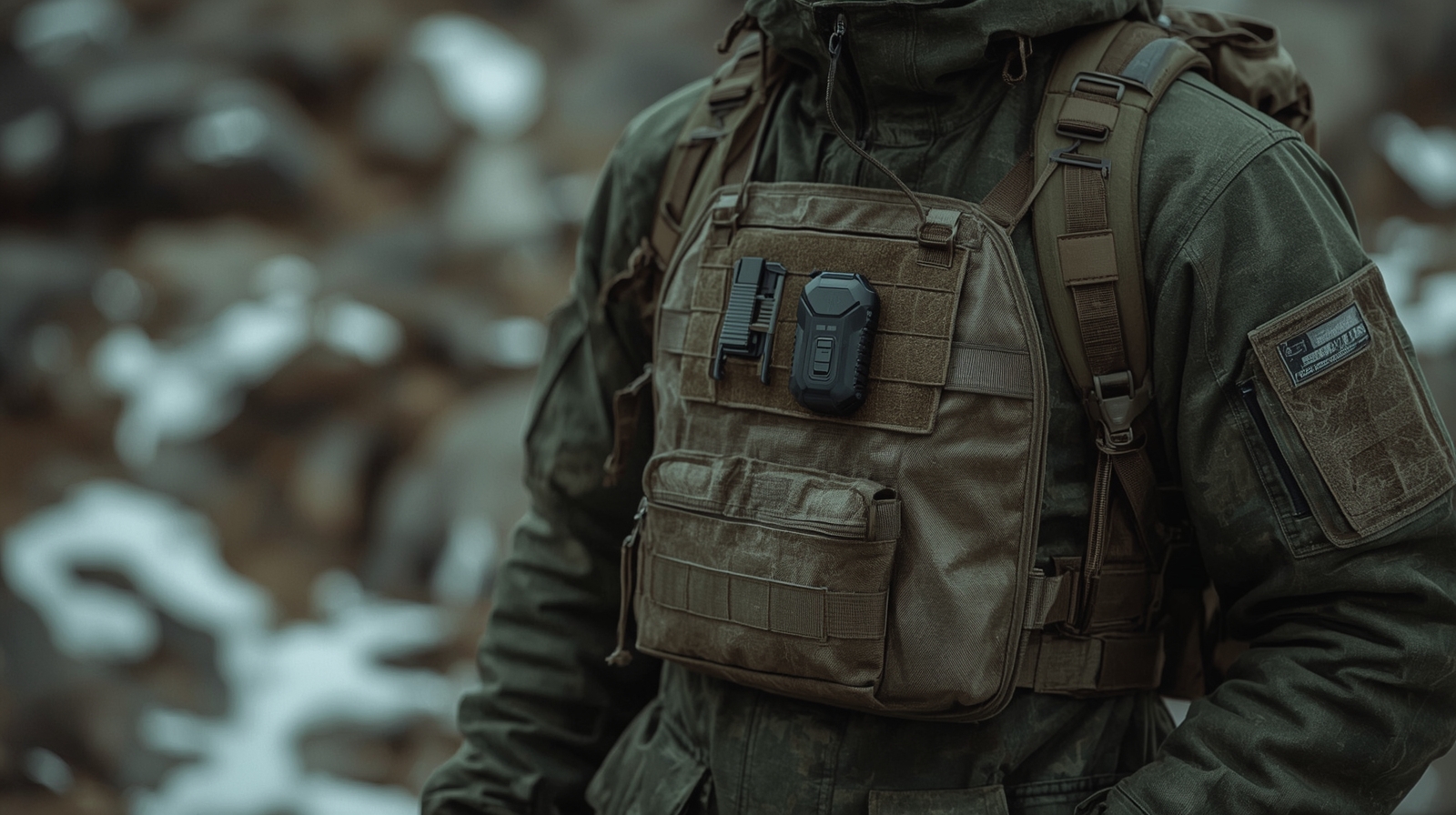
Military uniforms are no longer just fabric and stitching. The tactical jacket sitting on a shelf at your local surplus store is the civilian cousin of something the Pentagon is actively reinventing from the ground up. Defense agencies across the United States, United Kingdom, and allied nations are pouring billions into wearable sensor technology — embedding electronics, biometric monitors, thermal regulators, and communications hardware directly into combat clothing.
What they’re building in the lab today filters into the commercial market tomorrow. And understanding that pipeline changes how you should think about every tactical jacket purchase you make. This guide translates the military’s sensor-platform engineering criteria into a practical buyer’s framework — because the features that matter in a $4,000 combat shirt and a $250 commercial tactical jacket are more similar than most buyers realize.
The sensor-platform evaluation framework — five criteria that apply at every price point:
— Thermal management: Does it regulate heat during movement and retain it at rest?
— Moisture handling: Does it move vapor outward through every layer without creating internal condensation?
— Mobility range: Can you perform every required physical task without garment restriction?
— Load compatibility: Does it work with your pack, plate carrier, or load-bearing equipment — not against it?
— Durable construction: Is it built for the actual wear patterns of field use — not a product photo?
Military procurement officers evaluate every combat garment against these five requirements. Civilian buyers should do the same. Aesthetics and colorways come after, not before.
How the Military Thinks About Wearable Sensor Integration
The military’s interest in smart uniforms isn’t new, but the capability curve has accelerated dramatically in the last decade. Programs like the U.S. Army’s Soldier Monitoring and Readiness Technology (SMART) initiative and DARPA’s work on physiological status monitors have moved wearable sensing from science fiction into active field trials. The core concept: if a commander can see real-time biometric data for every soldier in the field, they can make better decisions about when to push forward and when to pull back.
💓
// Active Program
Physiological Status Monitoring
// U.S. Army SMART Initiative · DARPA Physiological Status Monitors
Sensors embedded in close-skin garment layers track heart rate variability, skin conductance, respiratory rate, and core body temperature. Data transmits wirelessly to a command interface, giving leadership a biological readiness picture of the entire unit simultaneously. Modern iterations use flexible electronics and energy-harvesting materials that draw power from body movement and heat differential — no dedicated battery required.
Civilian takeaway: Garments designed for sensor proximity — form-fitting base layers, articulated contact zones — perform better as biometric wearable hosts if you use fitness monitors or tracking devices.
⚖️
// Active Program
Load and Structural Monitoring
// Army Research Lab · Ergonomic Load Prediction Programs
Load sensors integrated into jacket shoulder structures and back panels measure cumulative musculoskeletal stress across a patrol — data that helps predict injury risk before it becomes a casualty. The research behind this program has generated the most rigorous validation of ergonomic load distribution in garment design that exists anywhere in the clothing industry.
Civilian takeaway: Ergonomic shoulder and back panel design isn’t marketing language. It’s the primary output of a military injury prevention research program. Features that distribute load properly prevent real injuries on real terrain.
🌡️
// Active Program
Active Thermoregulation
// DARPA Accelerated Learning / Arctic Operations Programs
Jackets that don’t just insulate passively but respond dynamically to the wearer’s thermal state. Current military-grade systems combine phase-change material liners, adjustable ventilation zones, and electronic thermal actuators to maintain optimal core temperature across varying exertion levels. Full active thermoregulation remains expensive and military-exclusive — but the research has validated the specific passive features that approximate its effect.
Civilian takeaway: Adjustable ventilation systems, underarm zips, and chest dump vents are the civilian equivalent of military electronic temperature management. They’re not luxury features — they’re validated thermoregulation mechanisms.
The Fabric Revolution Underneath the Sensors
Sensor integration only works if the base fabric can support it. This has driven a parallel revolution in military textile science that directly benefits the commercial tactical gear market. The U.S. Army Research Laboratory has published extensive research on conductive fiber weaves, phase-change material liners, and moisture-wicking architectures that serve dual purposes — managing the soldier’s microclimate while acting as a substrate for embedded electronics.
🔌
// Military Textile R&D
Conductive Fiber Weaves & E-Textiles
Conductive threads woven into fabric allow data and low-level power to travel through the garment itself, eliminating external wiring. Military contractors are developing jackets where the stitching is the circuit — enabling sensor networks, heated zones, and communication antennas to operate without any hardware visible from outside the garment.
Commercial signal: Look for jackets with articulated internal routing — channels, loops, and cable management passages through the lining. These are the architectural markers of thoughtful internal design that will support electronic integration as it matures to accessible price points.
🧊
// Military Textile R&D
Phase-Change Material Liners
Phase-change materials (PCMs) absorb heat as they transition from solid to liquid state at body temperature, then release it as they resolidify when external temperature drops. Military jackets incorporating PCM liners buffer temperature spikes during high-exertion movement and prevent dangerous heat buildup that degrades both physical performance and sensor accuracy.
Commercial signal: Commercial tactical jackets referencing microencapsulated PCM technology or “active thermal buffering” are drawing directly from this R&D pipeline. The claims are technically real — not marketing invention.
💧
// Military Textile R&D
Moisture Management Architecture
Wet fabric disrupts sensor contact, adds weight, and accelerates hypothermia risk. Military textile programs treat moisture management as a tactical requirement, not a comfort feature. The research has produced layered moisture-wicking systems — not single-layer solutions — because moisture migration must continue outward even as external conditions attempt to push it back in.
Commercial signal: Serious tactical jackets use DWR-treated face fabrics, breathable membranes, and base-layer-compatible wicking systems. Any jacket relying on a single waterproof layer without breathability engineering is architected against this validated framework.
🔬
// Performance Standard
Breathability Ratings — The Ignored Number
Breathability is measured in grams of moisture vapor transmitted per square meter per 24 hours (g/m²/24h). Waterproof ratings dominate buyer attention, but breathability determines whether you overheat and sweat-saturate your insulation during high-output movement. A jacket rated at 5,000 g/m²/24h will leave you soaked in sweat under exertion.
Military standard: Active-use garments target 20,000 g/m²/24h or higher. This number is on spec sheets — look for it. Below 10,000 is inadequate for sustained field use. Above 20,000 approaches genuine military-grade performance.
🧥
// Gear · Outer Shell
High-Breathability Tactical Jackets — 20,000+ g/m²/24h
Arc’teryx · Outdoor Research · Fjällräven — breathability-rated hardshells with pit zips and helmet hoods
Browse ›
What Active Conflict Zones Are Teaching Gear Designers
Theory and lab results only go so far. The real proving ground for wearable military technology is active conflict, and the conflicts of the last two decades have generated specific, hard-won lessons that are reshaping how tactical jackets are designed and evaluated. Each theater produced a different failure mode — and a different design response that has since filtered into the commercial market.
// Problem Exposed
- Extreme temperature swings — freezing nights, 100°F+ days — exposed the limits of single-purpose outerwear
- Soldiers needed to transition rapidly between thermal states without a full kit change
- Single-layer solutions left operators either overheating during movement or under-insulated at static positions
// Design Response
- Pushed military toward modular layering systems with standardized attachment interfaces
- Drove development of MOLLE-compatible chest panels and removable liner systems now standard in commercial tactical jackets
- Validated the principle that thermal adaptability requires modularity — single-garment solutions are architecturally incapable of solving the problem
// Problem Exposed
- Urban combat highlighted bulk and noise — jackets loaded with rigid sensor housings created movement restriction and audible rustling that compromised stealth
- Hard shell materials and rigid external panels caught on debris and door frames in confined space clearance
- Elbow and shoulder reinforcement placed for visual appearance rather than real wear patterns failed rapidly
// Design Response
- Military designers pushed toward flexible sensor arrays and softer shell materials
- Articulated elbows and pre-curved sleeves became functional requirements, not ergonomic upgrades
- Reinforcement placement began mapping to actual field wear data — where pack straps, rifle stocks, and wall contact actually contact the jacket — not where it looks impressive on the shelf
❄️
Eastern Europe / Arctic
// Problem Exposed
- Operations in sub-zero environments with sustained high-output movement produced dangerous sweat accumulation in passively insulated garments
- Standard insulated jackets performed well at rest but became liabilities during movement — saturating with moisture that couldn’t escape quickly enough
- Sensor accuracy degraded significantly as moisture built up against skin contact zones
// Design Response
- Accelerated military investment in active thermoregulation and dynamic ventilation systems
- Validated the importance of mechanical ventilation — underarm zips, chest dump vents — as primary thermoregulation tools in cold environments, not warm ones
- Generated the research base that now informs breathability rating standards and the 20,000 g/m²/24h active-use benchmark
Evaluating Tactical Jackets Through a Sensor-Platform Lens
Here’s where the military technology discussion becomes directly actionable. If you approach a tactical jacket the way a military procurement officer approaches a sensor-platform garment, you stop asking “does it look tactical?” and start asking “does it perform tactically?” The evaluation shifts from visual to functional — and every criterion below has a documented military origin and a real-world civilian payoff.
01
The Mobility Test — Full Range of Motion Under Load
A jacket that restricts arm elevation above the shoulder fails in the field, period. Military garment specifications require full range of motion testing under load — because restricted mobility during a critical action is a tactical failure, not a comfort issue. Raise both arms fully overhead. Reach across your body to your opposite shoulder strap. Simulate a rifle presentation. If the jacket pulls, rides up, or binds at any point, it has failed this test.
// Check for: articulated sleeve construction · underarm gussets · pre-curved elbows · raglan or action-back shoulder panels
02
The Layer Compatibility Test — Seamless Ensemble Integration
Military systems are designed as layered ensembles, not standalone garments. A tactical jacket must work seamlessly over a mid-layer and under a rain shell — without bunching at collar transitions, without cold-air gaps at wrist seams, without hem length that exposes the mid-layer during movement. Check collar height against your base layer neck. Check cuff circumference against your gloves. Check hem length against your hipbelt position. Any interface gap is a thermal chimney.
// Check for: collar height compatible with balaclava · cuffs that seal over liner gloves · hem length that clears hipbelt when arms are raised
03
The Pocket Architecture Test — Protected, Accessible, Organized
Military wearable sensor systems require accessible, protected storage for control units, batteries, and interface devices. This has driven increasingly sophisticated pocket architecture in combat jackets — waterproof zips, fleece-lined phone pockets, internal document sleeves, and pass-through cable ports. When you see these features in commercial tactical jackets, they’re not gimmicks. They’re direct translations of documented operational requirements. Handwarmer pockets positioned above the hipbelt are not a minor detail — they’re unusable below the hipbelt under a loaded pack.
// Check for: waterproof chest pockets · fleece-lined phone storage · handwarmer pockets above hipbelt height · internal cable routing ports
🪖
// Gear · Tactical Jackets
Tactical Softshell Jackets — Articulated, Pit Zips, MOLLE Compatible
5.11 Tactical · Vertx · Propper · Tru-Spec — mobility-engineered shells with operational pocket architecture
Browse ›
Key Features That Actually Matter
Given everything the military is learning about wearable technology and garment performance, here’s how to prioritize features when evaluating a tactical jacket. Every entry in this table has a documented military origin and a corresponding civilian field application. Features without both aren’t included.
| Feature |
Military Rationale |
Civilian Field Benefit |
| // Articulated elbows |
Required for full mobility under load — firing positions, climbing, equipment operation |
Climbing, paddling, shooting, scrambling — any task requiring full arm range of motion |
| // Underarm venting |
Primary thermoregulation mechanism validated in Eastern Europe / Arctic operations |
Heat dumping during sustained uphill movement without removing a layer |
| // DWR + breathable membrane |
Moisture management treated as tactical requirement — wet fabric disrupts sensor contact and accelerates hypothermia |
Rain protection without sweat saturation — the core thermal management trade-off in outer shell design |
| // Breathability ≥20,000 g/m² |
Active-use garment standard — below this threshold, moisture vapor cannot escape fast enough to prevent internal saturation during movement |
The difference between a jacket you can move fast in versus one that soaks you from the inside |
| // MOLLE-compatible panels |
Modular equipment attachment system — enables mission-specific load configuration without changing the garment |
Customize carry configuration for specific activity — range bag, medical pouch, comms pouch |
| // Fleece-lined pockets |
Sensor housing with controlled thermal environment — devices in uninsulated pockets suffer battery and screen failures in cold |
Phone and device storage that maintains device temperature for reliable operation in cold weather |
| // Reinforced elbows/shoulders |
Mapped to real field wear patterns from abrasion data — not visual placement |
Durability where pack shoulder straps, rifle stocks, and ground contact actually hit the jacket |
| // Internal cable routing |
Electronic integration readiness — passages designed for sensor and power cables without external exposure |
Hydration hose management, headphone routing, device cable organization without external snag points |
| // Removable liner |
Thermal adaptability — single garment must cover multiple temperature and activity bands without full kit change |
Multi-season versatility — one jacket across 20°F to 50°F+ operating range with liner in or out |
| // YKK zippers |
Industry reliability standard — field failure of a main zipper in hostile conditions is a mission-ending equipment failure |
Zippers that still work after two years of daily use, cold temperatures, and repeated dirty-hand operation |
The Civilian Market Gap: What You Can Buy Now vs. What’s Coming
True military-grade wearable sensor integration isn’t available on the commercial market at accessible price points yet. What you can buy now are jackets that are architecturally ready for the future — garments designed with the structural and material foundations that will support sensor integration as the technology matures. Research published through MIT Lincoln Laboratory and similar defense-adjacent institutions suggests flexible, washable electronic components integrated into garments will reach commercial viability within five to ten years. The jackets that will accept the upgrade are the ones built with proper internal architecture today.
🛒
// Available Now · $150–$350
What Commercial Jackets Deliver Today
// Military R&D material science + mobility engineering at civilian price
- Fabric technology and moisture management architectures validated by military programs — at commercial production costs
- Mobility engineering (articulated elbows, gussets, pre-curved sleeves) derived from military range-of-motion requirements
- Modular pocket architecture and internal routing channels designed for electronic-integration readiness
- Breathable waterproof membranes approaching 20,000 g/m²/24h performance at the upper end of the commercial price range
- MOLLE and PALS webbing compatibility enabling accessory ecosystem integration
🔭
// 5–10 Years Out · Emerging
What the Pipeline Is Delivering Next
// Currently military-exclusive — pricing toward commercial viability
- Flexible, washable biometric sensors woven directly into base layer fabric — continuous HRV, temperature, and fatigue monitoring
- PCM liners in mainstream commercial garments — active thermal buffering without electronics or batteries
- E-textile power distribution — low-level current through conductive threads enabling heated zones and device charging through garment contact
- Integrated communications — antenna arrays woven into jacket shoulders and back panels for improved radio performance
- Jackets built with proper internal channel routing today will accept these upgrades as drop-in additions — others will not
Common Mistakes Tactical Jacket Buyers Make
Understanding military sensor-platform thinking exposes a set of predictable buyer errors that cost money and field performance. Each one follows the same pattern: a decision that seems reasonable at the point of purchase, with consequences that only become visible under actual field conditions.
// Buyer Error
Appearance Over Architecture
Buying a jacket that looks military without performing militarily. Multicam or ranger green colorways mean nothing if the garment restricts movement, traps moisture, or falls apart under pack straps after two seasons. A jacket that fails the mobility test in the fitting room will fail worse in the field.
// Correct Approach
Evaluate Architecture First
Run the three evaluation tests before considering colorway or aesthetics. A jacket that passes all three tests in olive drab outperforms one that fails them in full Multicam. Color is the last decision — architecture is the first. Military procurement officers don’t evaluate visual appearance until functional requirements are confirmed.
// Buyer Error
Ignoring the Breathability Number
Waterproof ratings get all the attention. Breathability ratings — measured in g/m²/24h — are equally critical and consistently ignored. A jacket rated at 5,000 g/m²/24h will leave you soaked in sweat during high-output movement regardless of how well it blocks rain. You’re protected from the outside while being soaked from the inside — a net-zero outcome.
// Correct Approach
Check the Spec Sheet
The breathability number is on spec sheets — find it before purchasing. Military active-use standard: 20,000 g/m²/24h or higher. Below 10,000 is inadequate for sustained field movement. Above 20,000 approaches genuine military-grade performance. If the manufacturer doesn’t publish the number, that’s also information.
// Buyer Error
Single-Purpose Outerwear
A jacket that only works in one temperature band is a field liability. Afghanistan proved that conditions change faster than a full kit swap allows. A jacket without removable liner, without adjustable ventilation, and without layer-compatible construction requires a complete gear change every time the activity level or temperature shifts — which in real field use is constantly.
// Correct Approach
Prioritize Thermal Adaptability
Prioritize jackets with removable liners, adjustable ventilation, and layer-compatible construction. The military’s move toward modular layering systems reflects a fundamental operational truth: conditions change, and gear that can’t change with them becomes a liability at the worst possible moment. Thermal adaptability isn’t a premium feature — it’s the minimum viable requirement for field use.
// Buyer Error
Misaligned Reinforcement
Elbow and shoulder reinforcement positioned for visual impression rather than actual wear patterns. Iraq and Syria combat data showed that reinforcement placed for aesthetics fails in weeks while reinforcement mapped to real contact zones — pack shoulder straps, rifle stocks, wall and ground abrasion — survives years. Most buyers never check this alignment because it’s not visible in product photos.
// Correct Approach
Map Reinforcement to Real Contact
Put on the jacket with your actual pack. Identify where the shoulder straps contact the jacket. Check whether the reinforcement panel is actually under those contact points — or placed 2 inches away for visual balance. Repeat with your rifle or tool if applicable. If the reinforcement doesn’t align with your real wear pattern, the jacket will fail there first regardless of the material specs.
// Field Gear · Amazon
Tactical Jacket Kit
Jackets and accessories that pass the sensor-platform evaluation criteria. Affiliate links support this site at no extra cost to you.
🧥
Primary Shell · Softshell
Tactical Softshell Jackets
High-breathability primary shell for active movement. Articulated sleeves, pit zips, and MOLLE-compatible panels. The default choice for dynamic field use in dry cold or light precipitation.
- 5.11 Tactical Approach Jacket
- Vertx Integrity Shell
- Propper BA Softshell
Browse on Amazon ↗
Search · Amazon.com
🌧️
Severe Weather · Hardshell
Gore-Tex Hardshell Jackets
Maximum weather protection for static positions and severe conditions. Look for 20,000+ g/m²/24h breathability rating, pit zips, and helmet-compatible hood. The backup layer for the softshell primary.
- Arc’teryx Beta AR (Gore-Tex Pro)
- Outdoor Research Foray II
- Mountain Hardwear Exposure/2
Browse on Amazon ↗
Search · Amazon.com
🔄
Modular · 3-in-1
Removable-Liner Tactical Jackets
Shell with removable fleece or synthetic liner — one garment across a wide temperature and activity range. The modular architecture lesson from Afghanistan, applied commercially. MOLLE-compatible exterior.
- 5.11 Tactical Approach Fleece Jacket
- Rothco M-65 Field Jacket with liner
- Alpha Industries M-65 lined versions
Browse on Amazon ↗
Search · Amazon.com
🔩
Modular Attachment
MOLLE Pouches & Chest Panels
The modular accessory ecosystem that MOLLE webbing was designed for. Medical pouches, admin pouches, and utility pouches that attach to MOLLE-compatible jacket panels without additional hardware.
- Blue Force Gear MOLLE admin pouch
- Condor MA16 admin pouch
- 5.11 MOLLE compatible utility pouches
Browse on Amazon ↗
Search · Amazon.com
💧
Maintenance · DWR
DWR Reapplication Treatments
DWR degrades with use and washing. Field reapplication spray restores water repellency and breathability. A carry item for extended operations — one of the highest value-to-weight-cost ratios in any kit.
- Nikwax TX.Direct spray-on
- Gear Aid Revivex Durable Water Repellent
- Granger’s Performance Repel spray
Browse on Amazon ↗
Search · Amazon.com
🔧
Field Maintenance
Gear Repair Kit — Tenacious Tape
A shell tear in a blizzard is a life-threatening equipment failure. Tenacious Tape seals it in 60 seconds on wet fabric. Seam sealer addresses delaminating waterproof tape — the most common hardshell failure point under sustained use.
- Gear Aid Tenacious Tape (clear + fabric)
- Gear Aid Seam Sure seam sealer
- McNett Tenacious Tape repair patches
Browse on Amazon ↗
Search · Amazon.com
🛡️
Emergency Insulation
Packable Emergency Puffy Layers
Deployable in under 60 seconds. The emergency insulation layer that every field kit requires — for injuries, unexpected static positions, and weather events. Synthetic for wet-tolerance; down for weight-critical builds in dry climates.
- Patagonia Nano Puff (synthetic)
- Arc’teryx Cerium hoody (hydrophobic down)
- Rab Microlight Alpine (compact + warm)
Browse on Amazon ↗
Search · Amazon.com
📡
Wearable Tech · Sensors
Biometric Wearable Monitors
The civilian-accessible version of military physiological status monitoring. HRV, core temperature, fatigue scoring, and exertion load tracking — available commercially in chest strap and wrist-worn form factors today.
- Garmin HRM-Pro chest strap
- WHOOP 4.0 wristband (continuous HRV)
- Polar H10 sensor strap
Browse on Amazon ↗
Search · Amazon.com