Route Planning and Risk Assessment with Topo Maps: Terrain Traps, Handrails, Bailout Routes, and Turnaround Rules
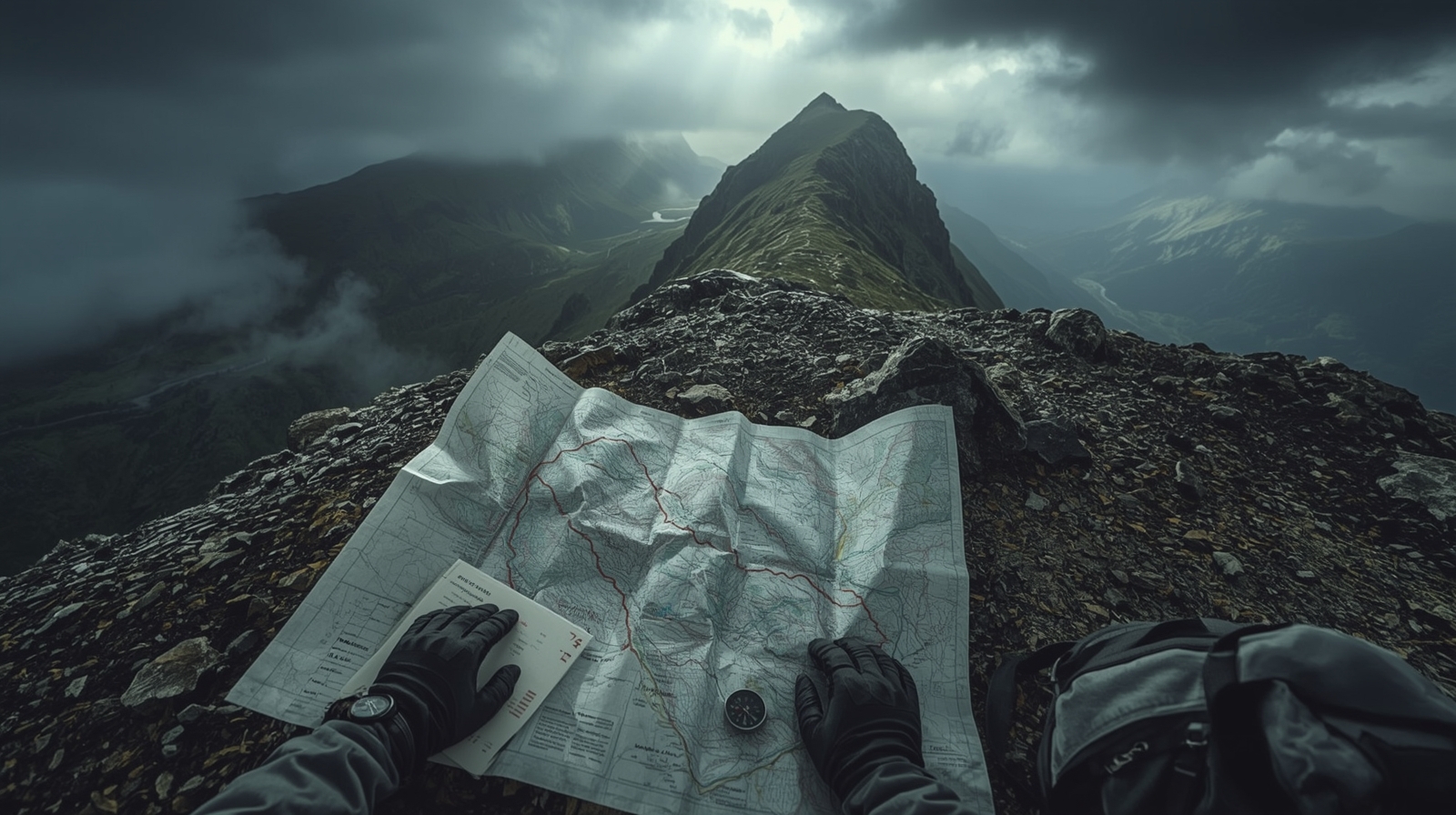
Reading Topo Maps Like a Planner, Not a Tourist
Before you ever pick a route line, commit to this mindset: most backcountry problems aren’t pure navigation mistakes. They’re judgment mistakes under pressure-fading daylight, weather rolling in, fatigue, and that quiet urge to push a little farther.
Related Articles:
In the military, we planned routes assuming we’d be tired, cold, and behind schedule-because we usually were. You can use that same discipline with a topo map and a simple risk assessment process.
A topo map doesn’t just tell you where you are. It tells you what the terrain will force you to do if things go sideways. That’s where terrain traps, handrails, bailout routes, and turnaround rules earn their keep.
Contour lines, slope, and what “tight lines” really means
Contour lines are your first, best risk indicator. Wide spacing usually means gentler terrain. Tight, stacked contours mean steeper slopes, slower travel, and higher consequences if you slip.
When you see contours pinching together along a drainage or ridge, assume you may be looking at a cliff band or near-cliff terrain. On the ground, that’s often where people get “cliffed out” and waste time trying to fight the map instead of respecting it.
Start reading the map in movement chunks. Instead of staring at your destination, evaluate the next 500 meters to 1 kilometer and ask a blunt question: How will the terrain control my speed and options? If the answer is “it funnels me,” you’re in higher-consequence terrain.
A useful habit is tracing likely paths and watching where contours force you to:
- Lose elevation you’ll have to regain
- Sidehill across steep slopes
- Commit to narrow corridors (like gullies)
- Make “one-way” moves (dropping into drainages with limited exits)
Scale, distance, and honest time estimates
Map scale tells you how much detail you’re working with. A 1:24,000 topo usually gives you enough resolution for micro-route choices-like avoiding cliff bands or picking a better creek crossing.
Smaller-scale maps can hide hazards by smoothing them out. That’s fine for big-picture planning, but risky when you’re making close-in decisions.
Time estimates should be conservative. If you only plan for an “ideal trail pace,” you’ll break your own turnaround rules the first time you hit blowdown, scree, or steep brush.
A simple way to stay honest is to estimate travel time by terrain type:
- Trail: predictable, usually fastest
- Off-trail forest: slower, easy to drift off line
- Steep ascent/descent: slower and more fatiguing than you expect
- Technical terrain: slowest, higher consequence, requires spacing and deliberate movement
This is also how topo maps save you from the classic trap: “It’s only two miles.” Two miles with 1,500 feet of gain and multiple drainages is not the same as two miles on a flat path.
Marking a route corridor instead of a single line
A single drawn line can set a mental trap. It convinces you there’s only one correct path, and that any deviation is failure.
Instead, mark a route corridor-an area you intend to travel through-then clearly mark no-go zones like cliffs, avalanche paths, swampy bottoms, or unstable slopes.
Use the map to identify where navigation will be easy and where it will be fragile.
- Easy zones: obvious features you can track (ridge crests, major drainages)
- Fragile zones: featureless forest, broad benches, rolling terrain where you can drift without noticing
If you’re using a printed map, highlight decision points and hazards in the margin with short notes. If you’re digital, set waypoints and name them in plain language (for example: “Cliff band avoid,” “Creek crossing alt,” “Turnaround DP”).
Now that you can read the map like a route planner, the next step is deciding what you’re willing to accept as “normal risk” for the day.
Defining Mission, Constraints, and Acceptable Risk
Good planning starts with clarity. If your objective is fuzzy, your decisions will be fuzzy too.
Your objective controls your route more than the map does
Before you pick a line, define the mission in one sentence. “Summit the peak” is a different mission than “reach the saddle and assess conditions” or “scout the basin and return before dark.”
The more specific your objective, the easier it becomes to say no to bad options. That matters when the terrain starts negotiating with you.
In training environments, we used a mindset that assumed the objective was optional but safety wasn’t. You can apply the same approach by building a plan that can succeed in stages.
For example:
- Primary objective: reach a specific ridge
- Secondary objective: glass a basin or check a pass
- Minimum win: return safely with better terrain knowledge for next time
If you’re emotionally attached to a single endpoint, you’ll rationalize poor terrain choices. Flexibility makes risk decisions cleaner.
Constraints: daylight, weather, season, and group capability
Constraints are limits that don’t care about motivation. Daylight is a hard constraint. Weather windows are hard constraints. Snowpack stability is a hard constraint.
Your group’s fitness and skill are also constraints. Pretending otherwise is how people get rescued.
Make constraints visible before you leave:
- Sunset and civil twilight times
- Forecast trend (not just a single temperature number)
- Expected moving time (conservative)
- Season-specific hazards (snow bridges, heat illness, stream crossings)
For weather, use an authoritative forecast and read the discussion, not just the icons: National Weather Service Forecasts.
A simple risk tolerance matrix you’ll actually use
You don’t need a complex worksheet to make better decisions. Use a simple two-axis model:
- Likelihood: How probable is the problem?
- Consequence: If it happens, how bad is it?
A steep slope above cliffs might be low likelihood of slipping for a strong hiker, but the consequence is severe. A shallow creek crossing might be high likelihood of wet feet, but the consequence is low.
The key is identifying high-consequence zones on the map before you say yes to them. If you must accept a high-consequence area, you reduce likelihood by stacking mitigations: better timing, better footing, slower pace, more spacing, or a safer line.
Quick rule: If the consequence is high, you need more than one mitigation. Don’t bet your day on a single assumption.
With mission and risk tolerance set, you can start hunting for the map features that quietly create the worst outcomes.
Spotting Terrain Traps Before They Spot You
Terrain traps don’t always look dramatic. A lot of them look “efficient” right up until you’re committed.
Mountain terrain traps: gullies, cliff bands, and bowls
Terrain traps are places where the landscape increases your chance of getting hurt or makes self-rescue difficult.
Gullies and narrow drainages are a classic example. They funnel you into steep terrain, concentrate rockfall, and-in snow conditions-concentrate avalanche debris.
Cliff bands often hide on topo maps as pinched contours, abrupt contour stacking, and sudden elevation change over short horizontal distance. If you see a slope that goes from moderate contours to extremely tight contours, treat it like a potential no-fall zone.
Bowls and amphitheaters can feel protected from wind, but they also act like collection zones for snow, rock, and water. If you commit into a bowl with only one exit, you’re trading easy travel now for limited options later.
Water and drainage hazards that don’t look scary on paper
Creeks and rivers can be deceptive. A crossing that looks trivial in late summer can be impassable during snowmelt or after storms.
On the map, watch for:
- Braided sections (can mean wider, but not always shallower)
- Steep banks (tight contours close to the water)
- Confluences (flow increases fast)
- Gorge-like pinch points (often bad crossings)
Also pay attention to how many drainages you’ll cross. Multiple crossings aren’t just time sinks. They raise hypothermia risk in cold seasons and increase slip risk when you’re tired.
A practical mitigation is to plan crossings where the topo shows a wider valley floor and gentler banks. If the map shows a narrow pinch point, don’t make that your “must-cross-here” location.
Human-made traps: roads, trails, and “easy” shortcuts
Man-made features can become terrain traps when you over-trust them. A faint trail can disappear in blowdown. An old road can turn into a swamp. A “shortcut” across private land can force a long detour.
Topo maps can also be outdated. Don’t base a critical safety decision on a trail that might not exist. If you’re relying on a bridge, plan for the possibility it’s washed out.
Treat human features as helpful-but not guaranteed. Your plan should still work if:
- The trail is faint or gone
- The bridge is out
- The road is gated
Once you know what to avoid, you can build routes that are easier to follow when your brain is tired and the weather isn’t cooperating.
Building a Route with Handrails, Catch Features, and Backstops
If terrain traps are what you avoid, handrails and backstops are what you build your plan around.
Handrails: keeping yourself oriented when you’re tired
Handrails are linear features you can follow with minimal navigation effort:
- Ridgelines
- Rivers and shorelines
- Roads and major trails
They reduce mental load and keep your route resilient when visibility drops.
The best handrails are hard to confuse with anything else. A prominent ridge crest is better than a subtle bench. A major river is better than a small seasonal creek.
When you design your route, ask: What feature will keep me honest if I drift? If your answer is “my GPS line,” you’re setting yourself up for trouble when batteries die or reception drops.
Catch features and backstops: your built-in error correction
Catch features are things you hit that tell you you’ve gone far enough: a trail junction, a saddle, a creek, or a distinct ridgeline.
Backstops are features that stop you from going too far: a river you won’t cross, a major road, or a ridge crest.
These matter most in low visibility. If you plan to travel on a bearing to a saddle, plan a catch feature beyond it-something that tells you you missed it.
This is how disciplined navigation prevents “wandering until you recognize something.” You deliberately create points where the terrain confirms your location.
Aiming off and attack points for precise movement
Aiming off is simple and effective. When you want to hit a small target on a linear feature (like a trail), you intentionally aim slightly left or right. When you hit the feature, you immediately know which direction to turn.
It prevents the classic mistake: reaching a trail and not knowing whether your objective is left or right.
Attack points are obvious features near a precise objective. Instead of navigating directly to a hidden campsite, you navigate to a clear saddle, creek junction, or ridge corner first. Then you make a short, controlled move to the exact spot.
These techniques matter when weather, darkness, or stress shrinks your margin. The map can support you, but only if your route is built around features you can reliably identify.
With the route skeleton built, it’s time to plan what you’ll do when the plan stops fitting reality.
Planning Bailout Routes and Decision Points
A bailout plan isn’t pessimism. It’s professionalism.
What makes a bailout route usable under stress
A bailout route is an exit plan you can execute when you’re tired, injured, or dealing with worsening conditions.
A good bailout route is:
- Simple: fewer navigation decisions
- Obvious: follows handrails when possible
- Lower consequence: avoids cliffs, steep sidehills, and complex drainages
When you pick a bailout, don’t only ask, “Is it shorter?” Ask, “Is it safer to travel in bad weather and easier to navigate when I’m smoked?” Often, the best bailout is longer but more forgiving.
Also consider where you end up. Does the bailout lead to a road you can access? Is it private land? Is there likely to be cell coverage? Your topo map can’t answer all of that, but it can show you where steep terrain and complicated drainages will slow you down.
Pre-briefed decision points reduce arguments in the field
Decision points are pre-selected locations where you stop and re-evaluate. They prevent the slow creep of bad decisions.
Instead of debating continuously, you move to a known point and assess.
A strong decision point has three traits:
- Easy to identify on the ground
- Before a commitment (like dropping into a drainage)
- Offers options (continue, reroute, or bail)
A saddle before a steep descent is a better decision point than the middle of the descent.
At each decision point, check:
- Time vs. your turnaround rule
- Weather trend vs. forecast
- Team condition (feet, hydration, energy, morale)
- Position and route confidence
This isn’t about being rigid. It’s about making choices early enough that you still have choices.
Communications and the “lost plan” everyone understands
Your group should know what happens if someone gets separated or navigation confidence drops. You want a plan that works even when stress makes people quiet or stubborn.
Keep it simple and explicit. Before you move out, agree on a basic “lost plan” like this:
- Immediate stop: The moment someone isn’t sure, they stop moving.
- Rally point: Everyone knows the nearest obvious rally point (saddle, junction, creek bend).
- Time standard: If separated, wait a set time (for example, 15-30 minutes) before escalating.
- Comms check: Use radios/phones at scheduled check times, not randomly.
- No solo wandering: Nobody “just goes to look” without telling the group.
If you’re solo, your lost plan becomes a self-check routine: stop, assess last confirmed location, compare terrain to map, then move only when you can explain your decision.
A good comms plan also includes who has the map, who has the compass, and how you’ll share decisions. That small structure prevents one person from quietly becoming the only navigator-and the only point of failure.