Snow Blindness, Dust, and Debris: Eye Protection, Emergency Eyewear Fixes, and Field Treatment for Corneal Irritation
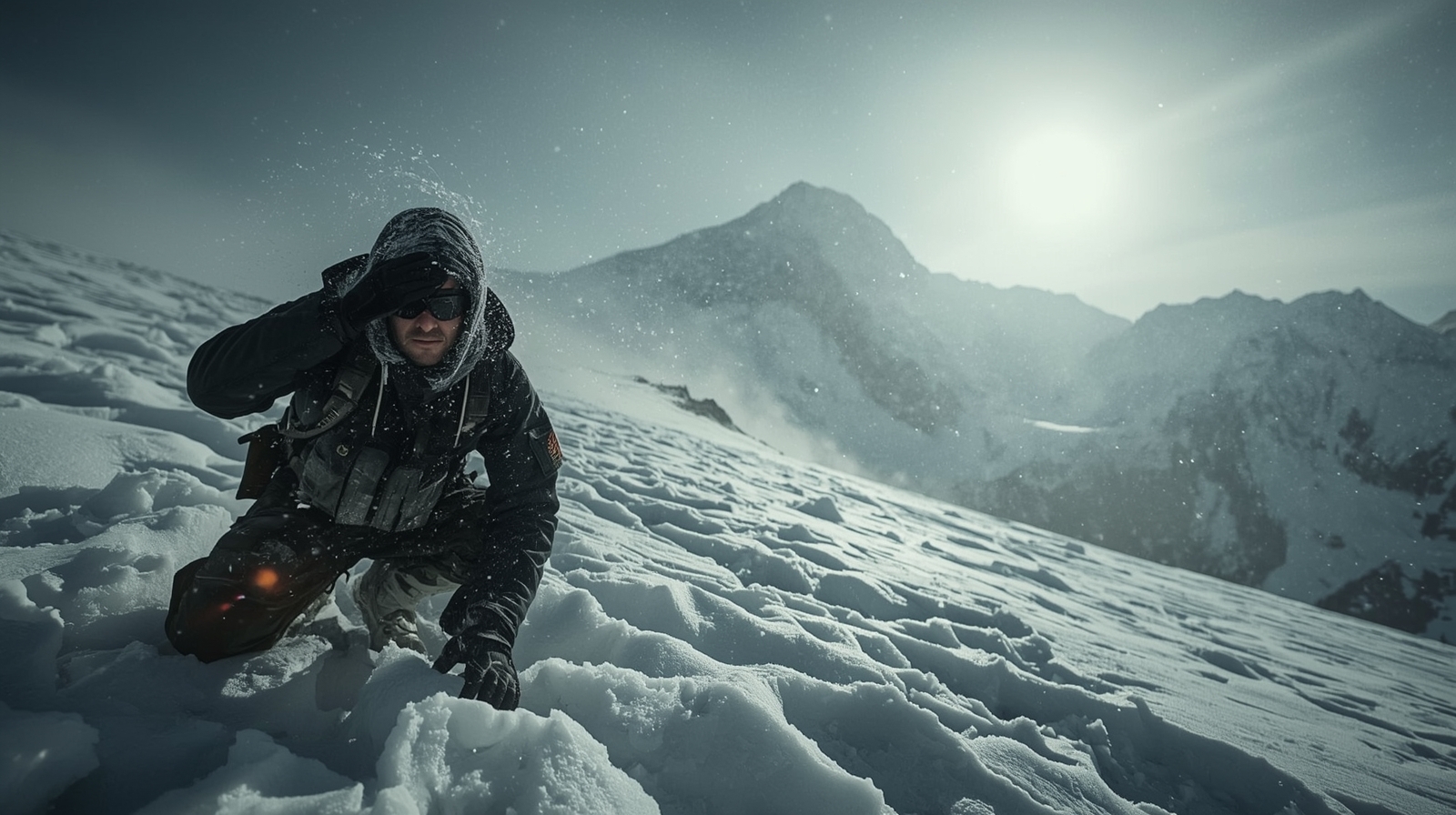
Snow blindness (photokeratitis): the UV injury you don’t feel until it’s too late
What’s happening to your cornea on snow, water, and high rock
Snow blindness is basically a sunburn on the surface of your eye. UV light reflects off snow and water and hits the cornea and conjunctiva hard, especially above treeline where there’s less atmospheric filtering.
The sneaky part is the delay. You can feel fine while moving, then hours later you’re dealing with tearing, gritty pain, and light sensitivity that makes even a headlamp feel like a spotlight.
Operationally, it follows the same pattern as other delayed-consequence injuries: the environment does the damage while you’re focused on movement, then it cashes the check when you stop. If you’re in snow, on open water, or in bright desert, treat UV exposure as a constant threat-not an occasional discomfort.
For medical background, the American Academy of Ophthalmology’s overview of photokeratitis is a solid reference: AAO photokeratitis (snow blindness) information.
How to recognize it early (before you’re effectively blind)
Early cues are easy to ignore. Your eyes feel dry, you blink more, you squint, and your vision gets “washed out” like a low-contrast photo.
Later, you’ll see heavier tearing, redness, headache, and that classic “sand in the eyes” sensation that doesn’t improve with rubbing. If multiple people in your group develop symptoms after the same snow travel, that’s a strong clue you’re dealing with UV injury-not random debris.
A simple field check is functionality, not perfection:
- Can you keep your eyes open in shade?
- Can you read a map or phone screen at arm’s length without severe pain?
If not, treat it like a mobility and safety problem. Navigation, footing, and hazard recognition degrade fast once you can’t keep your eyes open.
Dust, sand, and debris: mechanical irritation that turns into a real injury
Foreign body exposure in wind, scree, and vehicle-based travel
The next threat is more physical than solar: grit. It’s a problem in any dry, windy environment, but it spikes in a few scenarios:
- High winds on ridgelines
- Sandy washes
- Dusty roads
- Loose rock where you or a partner kicks material uphill
Even a tiny particle under the upper eyelid can scrape the cornea with every blink. That’s how “just dust” becomes a real injury.
If you spend time on unstable slopes, take the hazard seriously. Loose ground increases falls, but it also increases rock and dust splash into faces. The movement and spacing rules in traveling safely on loose terrain aren’t just about ankles and knees; they help prevent eye strikes and grit injuries as well.
Corneal abrasion versus simple irritation: why the difference matters
Irritation is discomfort that improves quickly after rinsing and blinking. A corneal abrasion is a true surface injury, and it usually feels worse than you’d expect from something “small.”
Classic abrasion signs include:
- Sharp or persistent pain
- Ongoing tearing
- Light sensitivity
- Feeling like something is still in the eye even after flushing
The practical reason the distinction matters is simple: abrasions carry infection risk. They can also worsen with contact lenses and can end a trip if you can’t manage light and keep the eye protected.
MedlinePlus has a straightforward medical explanation of corneal abrasions: MedlinePlus corneal abrasion information.
Eye protection that actually works: coverage, UV rating, and sealing against wind
Choosing between sunglasses, glacier glasses, goggles, and safety eyewear
Most people buy eyewear for comfort and aesthetics. In the field, you buy it for coverage and control.
If wind can get around the frame, dust will follow. If UV can get around the lens, your corneas will pay for it later.
Use this comparison when you’re deciding what to pack:
| Eyewear type | Best use | Strengths | Weak points | What to look for |
|---|---|---|---|---|
| Standard sunglasses | Everyday trail use | Light, breathable, easy to wear all day | Side gaps in wind/snow; often poor wrap | UV400, wraparound, larger lens |
| Glacier glasses | Snow, water, high exposure | Side shields reduce reflected UV and wind | Can fog; bulkier | UV400, removable side shields, grippy temples |
| Sealed goggles | Blizzard, sandstorm, high wind | Best wind/dust seal; protects from spindrift | Fog management required | Dual-pane or anti-fog, vent control, foam seal |
| Clear safety glasses | Dusty work, vehicle travel, night | Debris protection without dark tint | Not enough UV for snow unless rated | ANSI Z87.1, wrap, optional gasket |
If you want to go deeper on standards, OSHA summarizes eye and face protection requirements and terminology well: OSHA eye and face protection overview.
Fit, fog control, and the “micro-gap” problem
A good lens can still fail if the frame doesn’t match your face. The enemy is the micro-gap: a tiny space near your cheekbone or nose bridge that channels wind straight into the eye.
In snow or fine dust, that gap makes your eyes water until you rub them. That’s the moment small irritation becomes a scratched cornea.
Fog control is a discipline problem as much as a gear problem. Keep eyewear on before you need it so your eyes aren’t already watering when you put it on. Ventilate your face by loosening a buff, cracking a shell zipper, and avoiding breathing directly upward into lenses.
If you’re moving hard, consider switching from sealed goggles to glacier glasses when the wind drops. A little airflow often prevents fog.
Building a backcountry eye kit: small items that prevent big problems
The minimalist kit that covers the majority of eye issues
You don’t need a full clinic. You need a few items that let you rinse, protect, and avoid infection.
If you’ve ever tried to flush an eye with dirty water or a half-crushed bottle, you already know why this matters. Use this checklist as your baseline:
- Sterile saline pods or a small sterile eyewash bottle (preferred over “clean-looking” stream water)
- Lubricating eye drops (preservative-free if possible)
- A small clean cup or improvised eye-rinse collar (more on that later)
- Medical tape (for an eye shield and to secure fixes)
- Gauze pads (non-adherent if you have them)
- A rigid eye shield (commercial, or improvise from a cup)
- Nitrile gloves (so you don’t grind grit in while “helping”)
- A headlamp with a low mode (bright light makes assessment harder)
If you already keep a first-aid setup for extended trips, store these items in a separate small pouch. That keeps you from dumping the whole kit in the dirt during a wind event.
Hygiene and contact lens discipline (where people get burned)
Contact lenses are not automatically wrong in the backcountry, but they raise the stakes. Dust sticks to them, dry air makes them uncomfortable, and if you get an abrasion, lenses increase infection risk.
If you wear contacts, bring glasses as a fallback and be ready to switch early-not after your eyes are already irritated.
A field rule that holds up: if your eye feels gritty, your hands are dirty, and the wind is up, do not start digging around to adjust a lens. Get into shelter, wash or sanitize your hands, and rinse with saline first.
Most self-inflicted corneal scratches happen during clumsy contact lens handling, not during the original exposure.
Emergency eyewear fixes: keeping protection on your face when gear breaks
Fast repairs for broken frames, lost screws, and snapped straps
Eyewear failures are common: a temple arm cracks, a screw backs out, a goggle strap snaps in cold. Your goal is not pretty. Your goal is stable coverage that stays on during movement.
A few field-proven repairs:
- Missing screw: Lash the hinge with dental floss, thin cord, or a strip of tape wrapped tight. If you have a safety pin, it can act as a hinge pin.
- Broken temple arm: Tape the frame to your head with a long strip that runs from the lens edge around the back of your skull. Add a second strip lower around the occipital area so it doesn’t slide upward.
- Snapped goggle strap: Tie a replacement from cordage, a boot lace, or a ripped strip of webbing. Tie it longer than you think, then adjust with an overhand knot on a bight so you can re-tension it with gloves.
If you’re already building a robust kit, a micro repair set (tiny screwdriver, spare screws, a short length of shock cord) weighs almost nothing and saves trips.
Improvised side shields and wind seals (pros and cons)
When you don’t have the right eyewear, you can still improve what you have. Side shields can be made from duct tape, moleskin, or cut plastic.
A wind seal can be created by lining the frame edge with a thin foam strip (even a trimmed sleeping pad scrap) and taping it in place.
Pros and cons to keep you honest:
Pros
- Blocks reflected UV and wind-driven grit immediately
- Extends the usefulness of standard sunglasses
- Reduces tearing (which reduces rubbing and abrasion risk)
Cons
- Increased fogging if you seal too aggressively
- Tape adhesives fail in cold or wet unless you prep the surface
- Improvised pieces can obstruct peripheral vision if cut poorly
If your workaround reduces peripheral awareness, compensate with spacing and deliberate head movement. This is where disciplined movement helps, similar to how you tighten procedures when operating at night.
Field treatment for snow blindness: controlling light, pain, and further exposure
Immediate actions: stop the UV input and calm the eye surface
Once symptoms hit, the first “treatment” for snow blindness is removing the cause. Get out of the reflected environment if possible:
- Drop below a ridge
- Move into trees
- Pitch a tarp
- Sit with a jacket draped as a hood
Then reduce light exposure with the best eyewear you have, even if it’s improvised.
Use lubricating drops to reduce friction and help the cornea recover. Cold compresses over closed eyelids can reduce discomfort.
In most mild to moderate cases, symptoms improve over 24-48 hours if you stop UV exposure and don’t keep re-injuring the surface.
Do not rub your eyes. That’s not a motivational slogan; it’s damage control. Rubbing turns a UV-irritated surface into a scratched surface, and now you’re managing an abrasion plus the original injury.
Pain control and sleep: the practical recovery plan
Photokeratitis can be intensely painful, and pain drives bad decisions. If you can’t open your eyes, you can’t move safely.
Plan to stop early, set shelter, and run a controlled recovery period. Over-the-counter oral pain relief can help, but avoid anything that makes you clumsy if you still need to move around hazards.
The most effective “field medicine” here is darkness and time. If you can sleep, do it. If you can’t sleep, lie still with eyes closed and a light shield.
A bandana over the eyes (not tight) plus a hat brim is often enough.
If you need a winter shelter while waiting out symptoms, having the skills for a stable build matters. The construction and ventilation considerations in snow shelters that don’t collapse can help you create real light and wind protection while you recover.