
- Model
- MXT575
- Purchase destination
- Midland
- Page type
- Independent field guide
Vehicle GMRS field guide
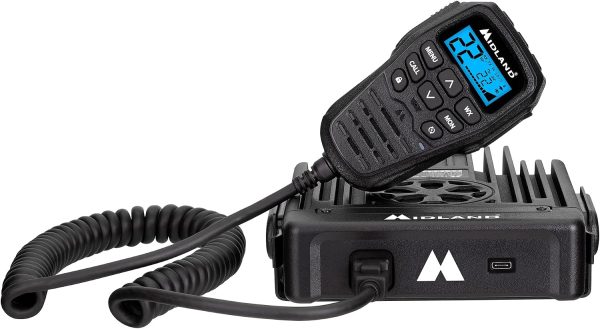
Midland MXT575 50W MicroMobile GMRS Radio
Maximum legal GMRS output in a clean, hideaway vehicle installation.
The MXT575 is a 50-watt, repeater-capable mobile radio for overlanding, ranch work, convoy travel and vehicle-based emergency communications. Its fully integrated control microphone lets the radio body mount out of sight while the controls stay in hand.
Drivers who want high power, repeater access and a low-clutter dashboard.
This is a vehicle-mounted radio, not a handheld. It requires a GMRS license plus antenna and power installation.
Military Trained may earn a commission from this link.
Fast decision layer
At a Glance
The numbers that explain the product before you leave for the retailer.
GMRS output
The maximum transmitter output available for GMRS mobile use.
High-power channels
Wide and narrow bandwidth are selectable.
Repeater channels
Split-tone capable for compatible repeater systems.
Privacy codes
CTCSS and DCS options help organize shared-channel traffic.
Use-case filter
Mission Fit
Start with the job, environment and team before deciding whether the radio format fits.
Strong fit
Overlanding and convoy travel
Vehicle power, an external antenna and repeater support make it a serious upgrade from relying only on handheld radios.
Strong fit
Farm, ranch and field operations
The high-output mobile format suits wide properties and teams that need a dependable radio mounted in a work vehicle.
Consider another format
Foot travel and zero-install setups
Choose handhelds if portability matters more than maximum mobile output or if you cannot install vehicle power and an antenna.

Vehicle communications in practice
What the MXT575 Changes in a Vehicle-Based Plan
A mobile radio is most useful when it is treated as part of a communications system, not as a power number on its own. The radio, antenna location, vehicle power, channel plan and operator procedure all affect whether a message gets through. The MXT575 is built for the vehicle that stays at the center of that system.
Lead and sweep vehicle coordination
In a convoy, the fixed radio can stay powered and ready while the driver keeps the control microphone within reach. Assign a primary channel, a backup channel and simple check-in points before movement so the group does not have to invent a procedure after vehicles separate.
Property and response staging
A work truck or parked command vehicle can become a dependable communications point for a ranch, storm cleanup site or volunteer staging area. The external antenna and vehicle electrical system make this format better suited to sustained coordination than a handheld carried in a pocket.
Repeater-assisted regional coverage
The eight repeater channels can be valuable where a compatible GMRS repeater is available. Confirm access rules and tone settings before a trip, then retain a direct radio-to-radio channel as the fallback because repeaters may be unavailable, out of range or privately managed.
What the specs mean
Field Breakdown
A practical reading of the headline features, without treating ideal-condition claims as guaranteed performance.
-
01
Hideaway radio body
Channel, volume and transmit controls live on the microphone, so the main unit can be mounted under a seat or elsewhere out of the way.
-
02
Range depends on the installation
Fifty watts improves the link budget, but terrain, buildings, antenna position and line of sight still determine real-world range.
-
03
Repeater-ready controls
Eight split-tone repeater channels can extend useful coverage when a compatible repeater is available and configured.
-
04
Weather and device support
NOAA weather scan and alerts support situational awareness, while the USB-C port can charge compatible field devices.
Fact-checked against Midland documentation on August 20, 2026. This guide explains manufacturer-listed specifications and is not a hands-on range test.
Before first use
A Four-Step MXT575 Setup Plan
Installation quality and team procedure have more influence on useful communications than chasing a theoretical mileage claim. Work through these steps before depending on the radio away from home.
-
01
Confirm license and operators
Obtain the required FCC GMRS license and understand who may operate under it. An individual license can cover immediate family members, but a mixed group should confirm that every operator has the proper authority before routine use. Record the call sign with the communications plan.
-
02
Choose a safe mounting route
Select a dry, ventilated location for the radio body and a microphone position that does not interfere with driving, airbags, pedals or controls. Route the supplied power and antenna cables away from sharp edges and moving parts. Follow Midland instructions or use a qualified installer when the vehicle wiring is unfamiliar.
-
03
Prioritize the antenna system
Place the supplied magnetic antenna on a suitable metal surface with as much clear exposure as the vehicle allows. Avoid pinching or sharply bending the coaxial cable. A poor antenna location can waste the advantage of a 50-watt transmitter, so test the complete installation rather than judging the radio on a temporary cable layout.
-
04
Program, brief and range-test
Set the same channel, bandwidth and privacy-code configuration on every radio. If repeaters are part of the plan, verify the correct split tones and access policy in advance. Conduct a local terrain test, establish scheduled check-ins and give every operator a direct-channel fallback for a lost link.
Technical checklist
Specifications That Matter
- Full 50-watt GMRS mobile radio
- 15 high-power GMRS channels
- 8 split-tone-capable repeater channels
- Wide and narrow bandwidth
- Fully integrated control microphone
- NOAA weather scan and alert
- Channel scan, monitor mode and programmable squelch
- Backlit display and keypad lock
- 2.1 dB unity-gain antenna with magnetic mount and cable
- Compatible with Midland FRS and GMRS radios
Make the right choice
Is a 50-Watt Mobile Radio the Right Format?
The MXT575 solves a specific problem: strong, always-available communications from a vehicle. These tradeoffs matter more than simply choosing the highest wattage.
Choose the MXT575
The vehicle is your communications base
It is a strong match when a truck, SUV, UTV or work vehicle stays with the team and you want maximum GMRS mobile output, a permanent external antenna and controls that do not occupy much dashboard space.
Consider a smaller mobile
Installation simplicity matters more than output
A lower-power mobile can be easier to power and less expensive when communication is mostly between nearby vehicles. The right choice depends on the expected terrain and antenna system, not on treating 50 watts as a guarantee of a particular distance.
Choose handhelds
People leave the vehicle
The MXT575 cannot follow a person onto a trail, around a worksite or through a building. Handheld radios are the practical primary tool for foot teams, with the mobile radio acting as a higher-powered hub when budgets and procedures allow both formats.
Plan the complete system
Antenna, terrain and procedure decide the result
Spend planning time on antenna placement, compatible settings, operator training and fallback channels. Those elements can improve reliability more than a specification comparison that ignores hills, buildings, foliage and the positions of the other radios.
Buyer intelligence
Questions That Decide the Purchase
Range claims, licensing, compatibility and operating details translated into direct buying answers.
Straight answer
Does the MXT575 require a license?
Yes. The MXT575 operates on GMRS frequencies, and a valid FCC GMRS license is required to transmit.
Straight answer
How far will it communicate?
There is no single dependable mileage figure. Line of sight, terrain, buildings, foliage, antenna selection and antenna placement can matter as much as transmitter power.
Straight answer
Can the main radio stay out of sight?
Yes. The integrated microphone carries the primary controls, allowing the radio body to be mounted away from limited dashboard space.
Straight answer
Is it compatible with handheld radios?
Midland lists the MXT575 as compatible with its FRS and GMRS handheld radios when both units use compatible channels and settings.
Straight answer
Can the MXT575 use a GMRS repeater?
Yes. Midland lists eight repeater channels and split privacy tones for repeater operation. You still need the correct repeater frequency and tone settings, and you must follow the repeater owner's access rules. Keep a direct channel in the plan in case the repeater cannot be reached.
Straight answer
Do privacy codes make a GMRS conversation private?
No. CTCSS and DCS codes filter which transmissions open your speaker, but other users on the channel can still receive the signal if their radio is configured accordingly. Use them to manage shared-channel noise, not for confidential communications.
Straight answer
What should I test after installation?
Check power stability, microphone access, transmit and receive audio, antenna-cable routing, direct channels and any programmed repeater channels. Then perform a realistic route test with the other radios your group will use. A stationary driveway check cannot represent hills, foliage and buildings farther along the route.
Straight answer
Does NOAA Weather Alert replace a dedicated warning plan?
No. NOAA reception is a useful additional source of weather information, but a preparedness plan should include more than one warning method and should not depend on a single radio, power source or reception location.
Ready to equip the team
Midland MXT575 50W MicroMobile GMRS Radio
If the radio matches the job and the rest of your communications plan, check the available configuration and put it to work.
Military Trained may earn a commission from this link.