Friction Fire Mastery: Bow Drill and Hand Drill Techniques When You Have No Lighter
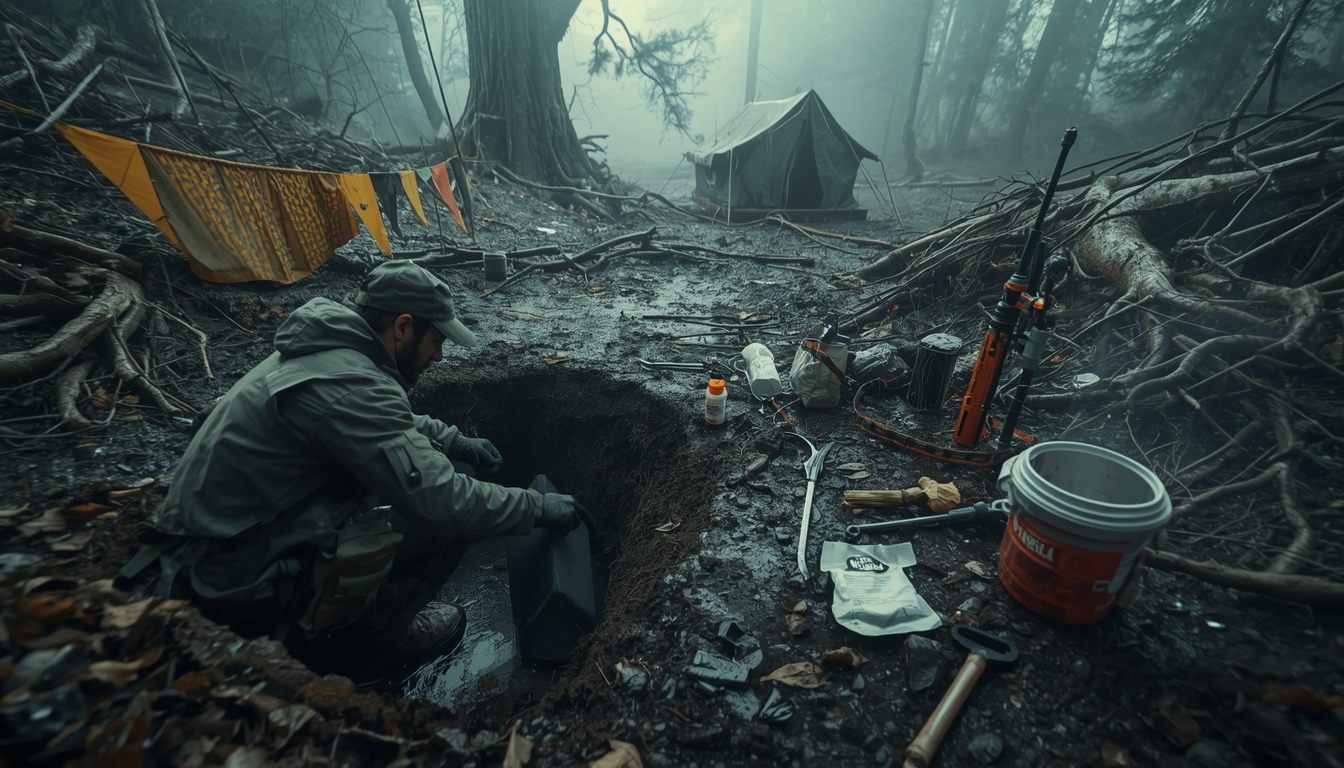
Bow Drill vs Hand Drill: What You’re Actually Doing
Friction fire isn’t “rubbing sticks together” in the vague, movie sense. You’re trying to create a tiny pile of hot, oxygen-fed wood dust (a coal). That coal reaches ignition temperature and then transfers into a tinder bundle.
Related Articles:
The bow drill and hand drill are the same concept with different power sources. With a bow drill, the bow and cord provide consistent rotation while your upper body provides downward pressure. With a hand drill, your palms provide both rotation and pressure.
That makes the hand drill simpler in gear, but harder on technique and endurance. So if you feel humbled by it at first, you’re not alone.
Here’s the mindset shift that improves success fast: you’re not trying to light the board directly. You’re manufacturing a controlled coal, then feeding it into tinder like you’re moving a candle ember into kindling.
To anchor the science, it helps to know what you’re aiming for. Wood dust heats through friction, then transitions from brown dust to darker, finer dust. When conditions are right, that dust becomes a cohesive, smoking coal.
According to the NIST overview of fire fundamentals, ignition depends on heat, fuel, and oxygen-remove any one of those and combustion fails. Friction methods are all about building heat without losing oxygen (smothering the coal) and without sabotaging your fuel (wet, resinous, or crumbly woods).
📝 Quick Summary: You’re building an ember first, then turning that ember into flame. If you focus only on “spinning faster,” you’ll usually burn energy without getting a coal.
The Non-Negotiables: Environment, Safety, and Realistic Expectations
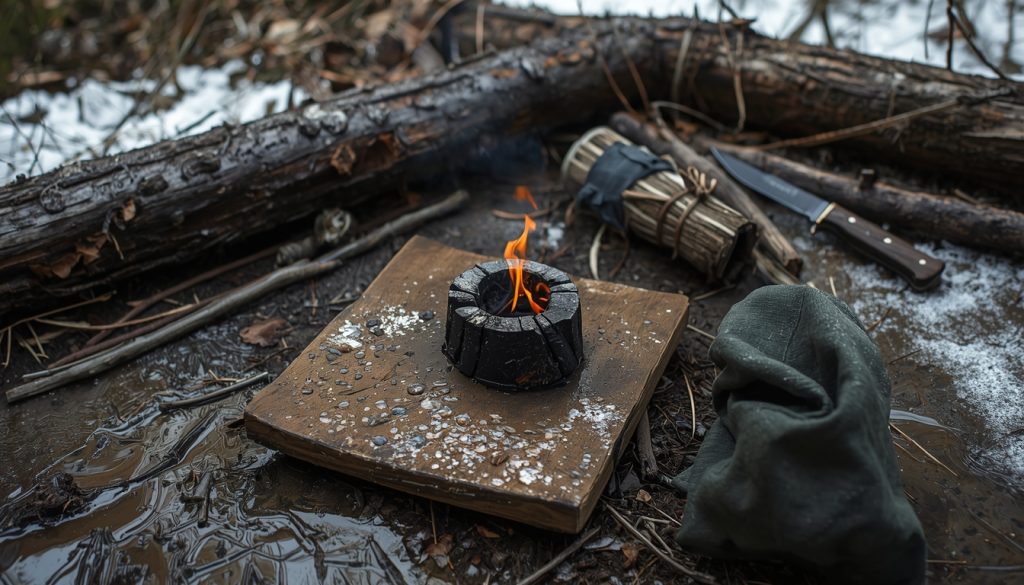
If your materials are wet, your platform is on snow, or the wind is ripping through your tinder, you can do everything “right” and still fail. That’s not you being bad at survival. It’s physics.
Start by choosing a work area that protects your coal. A flat spot with a windbreak is ideal. If the ground is damp, lay down bark, a split log, or even a folded piece of clothing under your hearth board so it doesn’t wick moisture from below.
Be honest about the goal and the conditions. In cold or wet weather, friction fire is possible, but it becomes a time-and-calorie decision. The U.S. Forest Service repeatedly emphasizes that hypothermia risk rises when you’re exposed and wet; staying dry and sheltered is a core priority in backcountry emergencies (USDA Forest Service safety resources).
If you’re shivering hard and burning daylight, it may be smarter to build shelter first. Then attempt fire with better control.
Practical safety matters too. You’ll often use a knife, and you’ll create a very hot coal. Keep your workspace organized so you’re not stepping on your coal or reaching across a blade.
Fast field checklist before you start:
- [ ] Wind control: Use a jacket, pack, log, or rock as a windbreak
- [ ] Ground insulation: Bark or wood under the hearth board
- [ ] Dry hands + dry dust: Wipe condensation; keep parts off wet soil
- [ ] Tinder ready first: Don’t make a coal and then “go look” for tinder
- [ ] Hydration + pacing: Friction fire is athletic-avoid redlining early
⚠️ Warning: Don’t practice friction fire when you’re already cold and exhausted unless it’s truly necessary. Practice in controlled conditions first so you know your personal limits.
With the environment handled, the next step is building a set that produces the right kind of dust. That’s where most attempts quietly fail.
The Friction Fire Set: Materials That Actually Work (and Why)
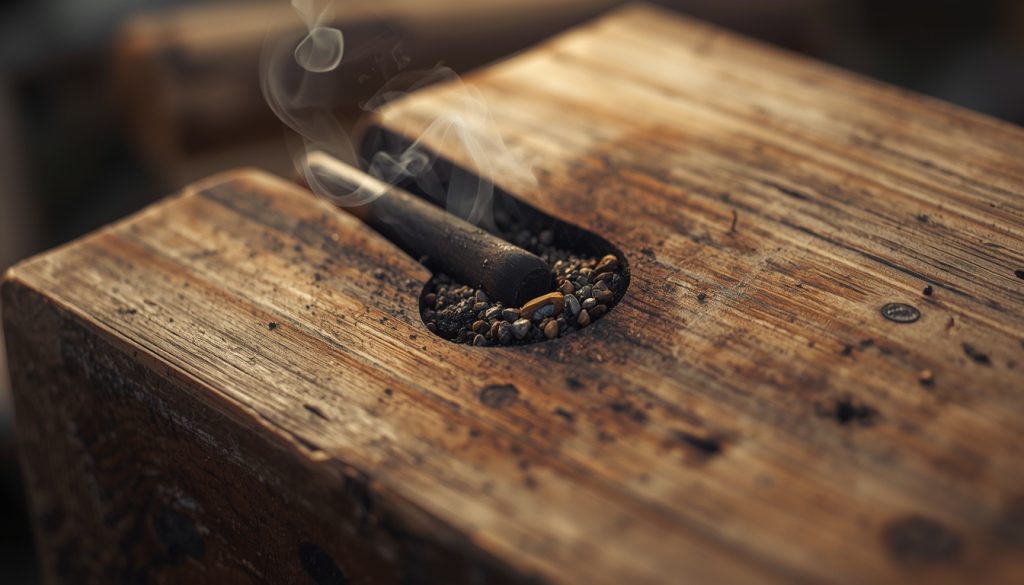
This is where most beginners lose the battle before they ever start drilling. The wrong wood pair, a fuzzy cord, or a tinder bundle that smothers the coal will make even perfect technique look “broken.”
Understanding the four core components
Whether you use bow drill or hand drill, you’re building the same system:
- Hearth board (fireboard): The base wood that receives the spindle
- Spindle (drill): The rotating shaft that creates hot dust
- Bearing block (bow drill only): A handhold that applies pressure with minimal friction
- Tinder bundle: What the coal graduates into
Your hearth board and spindle should usually be similar softness. People often assume “hard on soft” is best, but too-hard spindles can polish and squeal instead of making dust. Too-soft spindles can crumble.
A reliable beginner target is a medium-soft, non-resinous wood pair. In many regions, that means woods like cedar (non-resinous portions), cottonwood, aspen, willow, poplar, basswood, or similar local equivalents.
💡 Pro Tip: Your goal is fine, dark dust that piles neatly. If you’re getting coarse, light-colored shavings, you’re carving-not heating.
Bow drill vs hand drill: material demands at a glance
Use this quick table to set expectations before you commit energy.
| Factor | Bow Drill | Hand Drill |
|---|---|---|
| Best for | Most people, most conditions | Dry climates, practiced technique |
| Physical demand | Moderate | High (hands + shoulders) |
| Gear/material complexity | More pieces (bow, cord, bearing) | Fewer pieces (spindle + board) |
| Typical failure point | Cord slip, bearing friction | Hand fatigue, spindle wobble |
| Coal consistency | High once tuned | Variable until mastered |
The hand drill shines when you have minimal tools and very dry wood, like arid environments or late-summer conditions. In damp forests, the bow drill usually wins because you can produce more rotation with less hand abrasion.
Tinder: the part people rush (and regret)
Treat tinder like your fire insurance. Your coal is small and fragile, and it needs the right structure: airy enough for oxygen, fine enough to catch, and dry enough to grow.
Good tinder is usually a layered system:
- Ultrafine catch layer: dry grass fuzz, thistle down, cattail fluff, inner bark fibers (cedar bark, cottonwood bark), or scraped wood fibers
- Transition fibers: shredded bark, dry grass, small leaf litter
- Small kindling staged nearby: toothpick-thin twigs, then pencil-thin twigs
If you’re unsure about dryness, do a simple snap test. Dry grass and twigs break sharply. Damp material bends and crushes.
One more key point: don’t make a tight “bird nest.” A tinder bundle that’s too compact smothers your coal. Build it airy, with a shallow bowl or pocket where the coal can sit while you fold fibers around it.
📝 Quick Summary: A perfect coal can still die in bad tinder. Build your tinder bundle and stage your kindling before you drill.
Now that you’ve got the right materials, it’s time to shape them so your effort turns into heat instead of squeaks and wobble.
Selecting and Shaping Your Bow Drill and Hand Drill Components
This is the foundation work that makes drilling (later) feel almost unfairly easier. Think of this as tuning a system: the better the fit, the more of your effort becomes heat instead of squeaks, wobble, and frustration.
Choosing wood: dryness beats “the right species”
If you remember one rule, make it this: dry, dead wood beats “perfect” wood. Standing dead branches are usually better than anything on the ground.
Look for wood that:
- Snaps cleanly and feels lighter than it looks
- Has no obvious damp smell
- Isn’t punky (crumbly, spongy rot)
- Isn’t oozing resin (resin can gum up dust and glaze surfaces)
If conditions are damp, split a dead branch. The interior is often drier than the outside. You can also warm components inside your jacket for 10-15 minutes while you gather tinder and prep your workspace.
For deeper background on how wood moisture affects ignition, the USDA has extensive material on wood and fire behavior that’s worth skimming when you’re learning (USDA Fire Effects Information System). You don’t need to be a fire scientist, but knowing moisture content is a major “heat sink” explains why marginal materials feel impossible.
Shaping the hearth board and notch (without overthinking it)
Your hearth board can be flat or slightly curved, but it needs stability. A common beginner mistake is using a board so thin it flexes. When it flexes, you lose pressure and scatter dust.
Good starting dimensions (field practical):
- Thickness: about your thumb thickness (roughly 1.5-2 cm)
- Width: 4-6 cm so it doesn’t tip
- Length: 20-30 cm so you can brace it
The first hole (burn-in) is made without the notch. After you’ve created a shallow socket and a little dust, you cut a notch that lets dust collect and oxygen feed the coal.
A reliable notch shape is a “pizza slice” that reaches close to the center of the socket-around 1/8 of the circle. Too narrow and dust clogs. Too wide and you lose pressure and stability.
Notch basics:
- Cut cleanly to the socket, but don’t remove the socket wall entirely
- Make space under the notch for dust to land (a leaf, bark chip, or thin wood)
- Keep the board stable so the notch doesn’t chatter and scatter dust
💡 Pro Tip: Put a dry leaf, bark flake, or thin chip under the notch. It becomes your coal tray, making it much easier to lift the coal into tinder without breaking it.
Spindle and bearing block (and why smooth isn’t always good)
For the spindle, straightness matters more than perfection. A spindle that wobbles wastes energy. It also causes the cord (bow drill) or your hands (hand drill) to slip.
Spindle starting dimensions:
- Bow drill: about 18-25 cm long, 2-2.5 cm thick
- Hand drill: often 45-70 cm long and ~1-1.5 cm thick (you need length for repeated hand strokes)
Shape the spindle ends differently:
- Bottom end (into hearth): slightly blunt/rounded to create dust
- Top end (into bearing block or your hands): more pointed to reduce friction
For a bow drill bearing block, you can use hardwood, bone, stone with a divot, or even a green (fresh) piece of wood. The whole point is to reduce friction at the top so most heat is created at the hearth.
If you have natural lubricants, they can help a lot. A dab of resin on the bearing side only, a smear of leaf wax, or a bit of animal fat can reduce top friction. Keep lubricants away from the hearth socket or you’ll contaminate your dust.
Bow and cord: tension, bite, and the “silent killer” (cord slip)
A bow drill is only as good as its cord setup. You want a cord that bites the spindle without shredding.
What you’re aiming for:
- A slightly springy bow (not a rigid stick)
- A cord that can be tightened enough to “twang”
- One wrap around the spindle with firm tension
Common cord options include boot laces, paracord inner strands, bank line, rawhide strips, or plant fiber cordage (if you’ve practiced making it). Paracord can work, but the slick sheath sometimes slips.
If that happens, try one of these quick fixes:
- Roughen the spindle lightly with your knife
- Tighten the cord and reduce bow wobble
- Use paracord inner strands for more grip
With your set shaped and tuned, you’re ready to seat the system properly. That’s where burn-in earns its keep.
The Burn-In: Seating Your Set for Consistent Dust
Before you go for a full coal, you want a “tuned” socket. Burn-in creates a matched pair: the spindle tip and hearth socket shape to each other.
If you skip this and immediately cut a notch, you often end up with a wobbly socket. That socket sprays dust instead of piling it. And without a dust pile, you don’t get a coal.
Think of burn-in as test-firing your system. You’re checking cord bite, spindle straightness, bearing friction, and hearth stability. Do it calmly and adjust early-this saves you from burning all your energy later.
Bow drill burn-in sequence (quick and controlled)
Start with the hearth board on your ground insulation. Place your coal tray (leaf or bark) under where the notch will be-so you don’t forget it later.
Put the spindle in place, wrap the cord once, and set the bearing block on top. Then do 15-25 strokes at a moderate pace.
You’re looking for a shallow socket and a light dust ring. You’re not trying to make a coal yet.
If the cord slips, tighten it or roughen the spindle lightly. Then try again.
Stop and feel your bearing block. If it’s getting hot, you’re wasting heat at the top instead of the bottom.
Fix it with:
- A tiny amount of lubricant in the bearing divot
- A slightly pointier spindle top
- Better vertical alignment (less lean)
Hand drill burn-in (keep it low-effort at first)
With a hand drill, burn-in is about stability and straight tracking. Start the spindle in the hearth socket and do short, slow strokes to seat the tip.
If you go full speed immediately, you can polish the socket and glaze it before it ever makes quality dust. Your first goal is a clean socket that “catches” the spindle rather than letting it skate.
Once it tracks reliably, you can gradually increase speed and pressure in later sets.
Cutting the notch so dust feeds (instead of choking)
Once the socket is formed, cut your notch so dust can fall out and collect. Your notch should meet the socket cleanly without leaving a ridge that blocks dust flow.
When it’s right, dust pours into a neat pile with each stroke. When it’s wrong, dust clumps inside the socket or smears.
A simple field check: do a few light strokes after notching. If dust isn’t falling cleanly, open the notch slightly and clean up ragged edges.
💡 Pro Tip: If dust keeps scattering, build a tiny “dust fence” with a twig or curled bark on the open side of the notch. You’re not sealing it-you’re just preventing wind and vibration from spreading your pile.
Once your notch is feeding properly, your next priority is body mechanics. A great set can still fail if you can’t keep the spindle stable.
Running the Bow Drill Stroke: Body Position and Rhythm That Makes Heat
A bow drill works best when your body becomes a stable frame. If your knee, wrist, and bearing hand are floating around, your spindle will wobble and your cord will jump.
Locking in your position is often the difference between “smoke only” and a real coal.
The lock-in stance (your anti-wobble setup)
Kneel with one knee down and the other knee up. Put the foot of your “up” leg on the hearth board to pin it.
Bring that same-side wrist tight against your shin. Now your bearing hand is braced by bone, not muscle. That one change can instantly improve stability.
Keep the spindle as vertical as you can. If it leans, you grind the socket sideways, widen it, and lose heat.
Your bow arm should move like a pendulum-smooth forward and back, not choppy.
Pressure vs speed: when to add what
Most people start too hard, too fast. That creates early smoke, but it can also glaze the socket and polish the spindle tip.
Instead, build in phases:
- Phase 1 (warm-up): moderate speed, light-to-moderate pressure for 10-15 strokes
- Phase 2 (dust building): moderate-to-fast speed, moderate pressure until dust darkens and piles
- Phase 3 (coal formation): fast speed, firm pressure for 10-20 strokes-then don’t stop abruptly
Stopping abruptly can break the dust pile apart or disturb the forming coal. Ease off pressure for the final 2-3 strokes, then gently remove the spindle.
What “good dust” looks like during bow drilling
You want dust that’s fine and increasingly dark, collecting in a small mound at the notch. If it’s tan and fluffy, you’re still in “sanding” mode.
If it’s chunky, you’re carving. That’s often caused by a too-sharp spindle tip or a notch that tears instead of powders.
Listen, too. A squeal often means glazing or too much top friction. A lower, gritty sound usually means you’re making usable dust.
⚠️ Warning: If you see smoke but the dust pile is barely growing, stop and diagnose. Smoke alone can come from heat that isn’t staying in the dust long enough to form a coal.
Once you can run stable bow-drill sets, the hand drill becomes easier to understand. The movement is different, but the success signals are surprisingly similar.
Hand Drill Mechanics: Building Speed Without Shredding Your Palms
Hand drill success is mostly about efficiency. You can’t brute-force it for long because your hands become the limiting factor.
Good technique helps you generate fast rotation while keeping the spindle stable and your skin intact.
The downstroke, the reset, and the “float” problem
Place your hands high on the spindle, press down, and slide your palms downward while spinning. At the bottom, quickly reset your hands to the top without knocking the spindle out of the socket.
Beginners often “float” during the reset. Pressure disappears, the spindle hops, and the socket gets chewed up.
Your fix is to keep some downward pressure during the reset by lightly pinching the spindle between your palms as you move back up.
If you’re drilling in very dry wood, longer strokes can work well. If conditions are marginal, shorter controlled strokes keep the spindle from wobbling.
Managing friction on your hands (without contaminating the hearth)
Dry hands are good. Sweaty hands cause slipping.
Wipe your palms on dry fabric and keep your spindle surface slightly textured (not glassy smooth). If you use any “hand lube” (sap or a tiny amount of natural oil), keep it above your grip zone so it doesn’t migrate to the spindle tip or hearth socket.
Contaminated dust can clump and refuse to coal.
A practical trick: wrap a thin strip of fabric around the spindle where your hands contact it. It reduces abrasion while still letting you spin fast-just make sure it doesn’t slip and rob rotation.
Use sets instead of one death-march attempt
Hand drill tends to work best in timed sets. Go hard for 20-40 seconds, rest briefly, then go again.
You’re trying to build heat progressively without letting the dust cool completely.
A simple pattern that works well:
- Set 1: seat and warm (moderate speed)
- Set 2: build dust pile (faster, steadier)
- Set 3: coal attempt (fastest + firm pressure)
During rests, don’t move the hearth board. Let the dust pile stay put, and keep your spindle ready so you can restart quickly.
Once your mechanics are decent, the fastest way to level up is learning to read the system. The signals are there-you just have to trust them.
Reading the Signals: Smoke, Dust, Sound, and What to Change Next
At this stage, pay attention like a mechanic listening to an engine. The system tells you what’s wrong long before you waste five more minutes on a setup that can’t possibly coal.
You’re watching four signals:
- Dust quality
- Dust volume
- Smoke behavior
- Stability
The “about to coal” signs you want
When things are going well, smoke becomes thicker and continues for a moment after you stop drilling. Your dust pile is dark, fine, and shaped like a small wedge under the notch.
The spindle feels stable-no sudden grabs, no chatter.
Here’s the key moment many people miss: after you stop, wait. Give the dust pile 5-10 seconds.
A coal often forms as the hot dust consolidates. If you disturb it too soon, you can ruin it.
📝 Quick Summary: Thick smoke + dark dust pile + stable spindle + smoke continuing after you stop = you’re in the right neighborhood.
Common failure patterns and the fastest fixes
Use this table as a quick diagnostic. It’s not exhaustive, but it covers the problems you’ll hit most often.
| What you notice | Likely cause | Quick fix you can try immediately |
|---|---|---|
| Cord slips on spindle | Low tension or spindle too smooth | Tighten cord; roughen spindle; switch to inner strands |
| Bearing block gets hot | Too much friction at top | Lubricate bearing; sharpen top point; reduce downward lean |
| Dust is light/tan and fluffy | Not enough heat or wrong pressure/speed balance | Increase speed slightly; use firmer pressure in final phase |
| Dust is chunky/shavings | Spindle tip too sharp or notch tearing | Blunt spindle bottom; clean notch edges |
| Loud squealing/glazing | Socket polished or resin contamination | Freshen socket with knife; switch to drier wood; avoid oily lube near hearth |
| Spindle jumps out | Poor body lock-in or wobble | Brace wrist to shin (bow drill); shorten strokes; straighten spindle |
If you keep getting smoke but no coal, assume one of two things:
- Your dust isn’t hot enough, or
- It isn’t accumulating in a way that lets it self-insulate
More speed helps sometimes, but better dust collection (clean notch, stable board, coal tray) often matters more.
A useful reference point is the combustion triangle-heat, fuel, oxygen-and how easily one leg gets compromised during friction fire. For a deeper technical explanation of oxygen flow and heat transfer, the NFPA fire safety education resources are a solid, plain-language place to explore the fundamentals.
Once you can reliably produce a coal (or get very close), the next challenge is protecting it and turning it into flame. That’s where many “almost fires” die.
Protecting and Moving the Coal Without Killing It
When you finally get a coal, the temptation is to celebrate and start moving fast. That’s exactly how most coals die.
Your job is to keep it intact, keep it breathing, and keep it insulated enough to grow.
Confirming you actually have a coal (not just hot dust)
After your final strokes, gently remove the spindle and don’t touch the dust pile yet. Give it 10-20 seconds to “cook.”
If you see smoke that continues on its own and the pile looks like it’s holding together, you’re likely there.
A real coal usually has a darker core and keeps smoking even if the air is still. Hot dust tends to stop smoking quickly once you stop drilling.
💡 Pro Tip: If you’re unsure, waft your hand near it (not directly over it) to add a tiny bit of airflow. If smoke increases without the pile collapsing, you’ve got something worth transferring.
The clean transfer: coal tray to tinder pocket
This is why you set up a leaf, bark chip, or thin wood “tray” under the notch. Lift the tray slowly and keep it level.
If the coal breaks apart, it’s often because the dust pile wasn’t consolidated yet-or your tray flexed.
Bring the tray to your tinder bundle, not the other way around. Then tip the coal into the tinder bundle’s pocket so it sits on the finest catch material, not buried under it.
If your coal seems delicate, don’t dump it from high up. Touch the tray edge to the tinder and let the coal slide in gently.
If your coal is weak: the “pause and feed” approach
Sometimes you’ll get a coal that smokes but won’t grow. Don’t rush to blow hard.
Instead, fold just a little tinder over it and give it 5-10 seconds to warm the fibers. Then use a slow, steady breath from a few inches away.
You’re trying to increase oxygen without scattering the coal or chilling it.
⚠️ Warning: A sharp, hard blow can do three bad things at once: scatter the coal, introduce too much cool air too quickly, and collapse your tinder pocket.
With a coal safely in your bundle, your next job is airflow control. This is where patience pays.
Tinder Bundle Ignition: The Blow Technique That Turns Coal into Flame
This is the make-or-break stage. You can do everything right on the drill and still fail here if your tinder bundle is too dense, too damp, or too coarse.
Building the “coal bowl” so it breathes
A good tinder bundle isn’t a tight bird’s nest. It’s an airy dome with a thin, fine pocket.
You want the coal to have oxygen access from below and the sides while it heats fibers above it. If you’re using bark fibers, shred them finer than you think you need.
If you’re using grass, mix short fine pieces with longer strands so the bundle holds shape without compacting.
Here’s a quick way to check structure before you ever make a coal: hold it up and look through it. If you can’t see any light through the center, it’s probably too tight.
Blowing strategy: start gentle, then build intensity
Treat it like coaxing a campfire, not inflating an air mattress. Start with slow, warm breaths.
Your exhaled air is warmer and slightly humid, which can help early tinder heating. As smoke increases, increase airflow gradually.
A practical rhythm that works:
- 5-10 seconds: coal warms the pocket (minimal blowing)
- 10-20 seconds: gentle breaths, pause, gentle breaths
- Next 10-15 seconds: stronger breaths as smoke thickens
If your face is right on top of it, you’ll usually blow too hard. Keep it at arm’s length (or slightly closer) so you can control airflow.
The handoff to kindling: don’t smother your first flame
Once the tinder ignites, feed it immediately with the smallest staged kindling. Don’t throw pencil-thick sticks on a newborn flame and expect it to win.
Think “ladder,” and climb it slowly:
- Toothpick-thin twigs
- Matchstick-thin twigs
- Pencil-thin twigs
- Finger-thick pieces
Lay kindling over the flame in a loose teepee or lean-to so air can rise through it. If you crush the flame under a heavy bundle, you’ll snuff it and go back to smoke.
📝 Quick Summary: A coal becomes flame when your tinder is fine, airy, and staged-and your airflow escalates slowly instead of blasting it.
Once you’ve got flame, conditions still matter. Wind, cold, and damp can take it away fast, so it helps to know the field adaptations that keep your fire alive.
Wet, Windy, and Cold: Advanced Adaptations That Save the Attempt
Friction fire doesn’t require perfect weather, but it does require you to control the micro-environment around your coal and tinder.
When conditions are ugly, you win by stacking small advantages.
Drying tactics you can actually do in the field
If everything feels damp, don’t keep drilling and hoping. Spend 5-10 minutes improving materials first.
High-payoff drying moves:
- Split “dead” sticks to access dry interior wood for spindle/hearth replacements
- Tuck spindle, hearth board, and tinder inside your jacket (not against sweaty skin) while you prep
- Shave dry curls from the inside of a split stick and add them to your tinder pocket
If you have any dry textile (bandana, sock, shirt hem), use it as a temporary wind shield around the tinder bundle while you nurse the coal.
For safety and planning, it’s worth knowing local fire rules before you practice in the wild. The National Park Service maintains clear guidance on fire restrictions and safe use in many areas (NPS fire safety information).
Wind management: build a “coal cave”
Wind is sneaky because it can help oxygen but also cool and scatter the coal. Your fix is a small windbreak, not a sealed chamber.
Use your pack, a log, or a shallow depression in the ground. If you’re in snow, carve a small platform and windbreak wall.
Keep the tinder bundle sheltered while still allowing you to blow from the windward side with control.
If your set keeps glazing in damp conditions
In marginal humidity, glazing shows up faster. You’ll hear more squeal and see less dust even though you’re working harder.
Your best move is often to refresh contact surfaces. Lightly roughen the spindle bottom and scrape the socket clean.
If the hearth is absorbing moisture from below, add thicker insulation or move to a drier base like split wood.
Sometimes the honest answer is to change materials. Swap to a drier hearth board piece or a different dead branch. Stubbornly drilling on compromised wood is one of the biggest energy drains in real-world survival scenarios.
Once you’ve got these adaptations in your pocket, the final piece is consistency. That comes from a simple, repeatable practice plan.
Putting It All Together: A Simple Practice Plan and Field-Ready Takeaways
Friction fire is a skill, not a trick. You’ll get dramatically better if you practice like you’re building consistency-because that’s what keeps you safe when it matters.
The 30-minute practice session that builds real confidence
Try this structure the next time you practice (backyard or a legal, safe area):
- 5 minutes: gather and prep tinder + staged kindling first
- 10 minutes: build or tune your set (straight spindle, clean notch, good cord tension)
- 10 minutes: drilling attempts with short breaks and quick adjustments
- 5 minutes: coal transfer + tinder ignition + kindling ladder
The goal isn’t just “make fire.” It’s to learn what good dust looks like, how stable body position feels, and how your tinder responds to different airflow.
Field checklist: what to do when it’s not working
When you’re stuck in smoke-without-coal mode, run this fast diagnostic:
- [ ] Is dust dark and fine, or light/chunky?
- [ ] Is the notch feeding dust into a pile, or clogging/scattering?
- [ ] Is the bearing block stealing heat (hot handhold)?
- [ ] Is your spindle vertical and stable, or wobbling?
- [ ] Is your tinder bundle airy and fine, with kindling staged?
Fix one variable at a time. If you change everything at once, you won’t know what actually improved performance.
The best final takeaway
If you want friction fire to be reliable when you have no lighter, your “secret weapon” isn’t brute force. It’s preparation and control: dry materials, stable mechanics, a dust pile that can consolidate, and tinder that’s ready to accept a coal.
Your next step is simple: pick one method (bow drill is usually the fastest path), practice until you can produce a coal consistently, then start adding difficulty. Light wind, cooler temps, slightly damp conditions-these are training tools, not excuses.
Keep it methodical, and you’ll be surprised how quickly friction fire stops feeling like luck and starts feeling like a repeatable skill.