Backcountry Wound Care When Rescue Is Delayed: Cleaning Methods, Dressings, Infection Prevention, and When NOT to Close a Cut
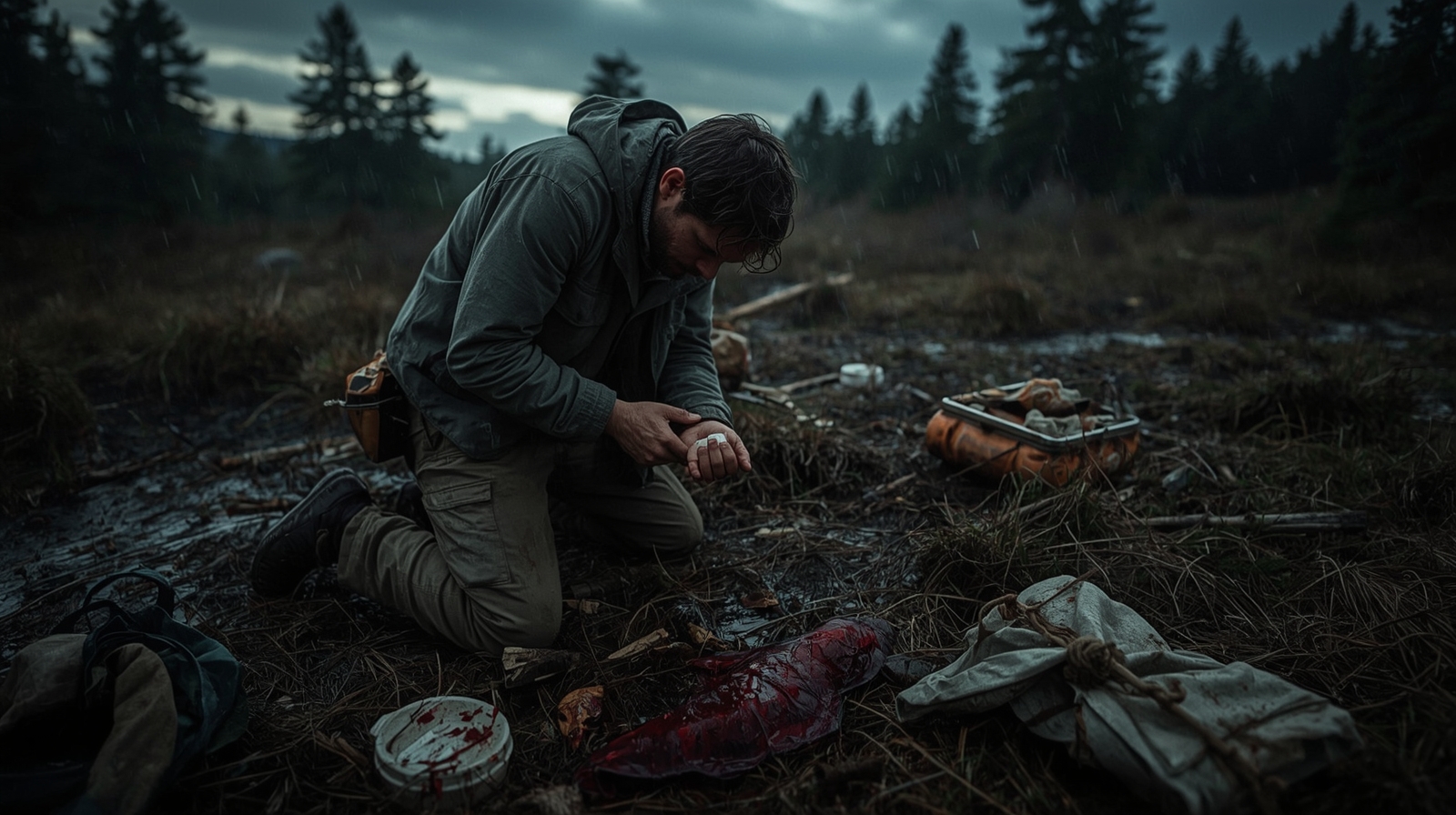
Priorities when a cut happens far from help: control bleeding, prevent shock, protect the patient
A backcountry cut is rarely just a “skin problem.” If rescue is delayed, your priorities look a lot like disciplined field medicine: stop life-threatening bleeding, keep the person warm and calm, then move into cleaning and dressing.
The mistake I see most often is starting to fuss with cleaning while blood is still pouring. The second common error is ignoring temperature and hydration because the wound “doesn’t look that bad.”
When you’re hours or days from higher care, you’re not just treating tissue. You’re managing performance: mobility, decision-making, and the ability to keep a camp running. A small wound can become a mission-killer if it gets infected or if the injured person spirals into hypothermia, dehydration, or exhaustion.
Start with safety and a simple plan you can repeat
Before you touch the wound, make the scene safe and slow yourself down. In the military we push a repeatable sequence because panic creates sloppy work.
Put on gloves if you have them. If you don’t, use a clean plastic bag, a rain mitten, or even a folded bandana as a barrier.
Then do a quick scan:
- Is there life-threatening bleeding?
- Is there a head/neck injury?
- Is breathing compromised?
If the answer is yes to any of those, handle that first. If the answer is no, you can move on deliberately.
A useful mindset is that you’re building a “care loop” you can sustain for days. That means clean hands, controlled bleeding, a stable dressing, and a plan for checks.
Stop bleeding first: pressure, packing, and escalation
For most lacerations, direct pressure solves the problem. Use gauze if you have it. If you don’t, use the cleanest cloth available.
Hold firm pressure for a full 5-10 minutes without peeking. Peeking breaks clots and resets the clock.
If bleeding continues, apply more material on top and keep pressure. For deeper wounds, you may need to pack gauze into the cavity (not just over the top), then hold pressure again.
If you carry hemostatic gauze, this is where it shines. Even then, it still requires pressure and time.
If a limb wound is pumping and you cannot control it with pressure and packing, a tourniquet may be appropriate. If you are not trained, follow a reputable protocol and prioritize getting help.
The point is not to be heroic. The point is to keep the person alive.
Keep the patient warm and functional while you work
Bleeding and stress make people cold fast, even in mild weather. Cold worsens clotting and makes pain feel sharper.
As soon as bleeding is controlled, insulate the person from the ground and cut wind exposure. A pad, extra layers, and a shell go a long way.
If you want a deeper dive on the quiet slide into hypothermia (and how afterdrop changes your rewarming plan), read our guide on hypothermia recognition and rewarming priorities. Wound care and temperature management are connected.
Pain control matters because it affects decisions. If you have OTC meds the person can safely take (no allergy or contraindication), use them early. A calm, warm patient bleeds less and cooperates more.
Triage the wound: decide what you can manage and what needs evacuation
Once bleeding is controlled, your next job is judgment. In town you can say, “let’s see how it looks tomorrow.” In the backcountry, tomorrow might be 15 miles of talus, river crossings, and bad weather.
You need to decide whether you’re stabilizing for self-evac, holding in place, or requesting rescue.
This is also where you determine whether the wound is a simple laceration you can clean and dress, or something with deeper structural risk (tendon, joint, nerve, major vessel). Many bad outcomes start with underestimating what a “deep cut” really means.
Depth and location: the “structures at risk” check
Start with location and what moves underneath it. Hands, wrists, ankles, knees, and the front of the neck deserve extra respect.
Ask the injured person to gently move fingers or toes through a full range of motion. If movement causes sharp deep pain, or if a finger/toe won’t move normally, suspect tendon injury.
Then check sensation and circulation:
- Numbness or tingling
- Pale or cold skin downstream
- Weak pulses compared to the other side
A cut over a joint that opens and closes as the joint moves can indicate deeper involvement. Those wounds also tend to heal poorly without proper care.
Use simple visual cues as well. If fat is visible, it’s deep. If muscle is visible, it’s very deep. If you can see something white and glistening that moves with motion, think tendon.
Contamination and mechanism: why “dirty” matters more than “big”
A small cut from a clean knife is often easier to manage than a wide scrape filled with grit. Mechanism matters.
Falls onto scree, bike crashes, chainsaw accidents, and riverbank cuts often drive dirt deep. That contamination is what turns a “minor” wound into a multi-day problem.
Take bites seriously, too. Animal and human bites are infection-prone because bacteria are pushed into tissue.
Puncture wounds from thorns, fish spines, or nails are similar. They look small, but they seal over quickly and can trap contamination.
If the cut happened in stagnant water, farm/animal areas, or involved soil contamination, treat it as high risk. Your cleaning needs to be more aggressive, and your threshold to evacuate should be lower.
Red flags that should change your plan immediately
Use this as a fast decision tool. If any of these are present, strongly consider evacuation or urgent medical contact:
- Uncontrolled bleeding after sustained pressure and packing
- Loss of function (can’t move digits, weak grip, foot drop)
- Numbness, tingling, or loss of sensation around the wound
- Wound over a joint with deep gaping or visible deep structures
- Signs of infection already present (pus, spreading redness, fever)
- Impaled objects you cannot safely stabilize
- Significant facial wounds (eye/eyelid involvement)
If you’re uncertain, err on the side of getting help. “Wait and see” is a risky strategy when rescue is delayed.
Now that you’ve made the call on severity, you can move into the part that prevents most long-term complications: cleaning.
Cleaning and irrigation when water is limited: get the dirt out without damaging tissue
Cleaning is where backcountry wound care wins or loses. Infection prevention is less about the brand of antiseptic and more about physically removing contamination.
In training, we emphasized irrigation because bacteria and debris must be flushed out, not just “killed” on the surface.
The field challenge is real. You may have limited water, cold hands, fading light, and a patient who wants to rush. Your goal is a practical standard: remove visible debris, irrigate thoroughly with the cleanest water available, and avoid chemicals that damage tissue.
Choose the cleanest water you can produce, then protect it from re-contamination
The best option is sterile saline. Realistically, you’ll use treated drinking water.
Filtered and chemically treated water is generally a reasonable irrigation choice when you don’t have sterile supplies. The key is how you handle it.
The workflow matters. If you treat a bottle of water, don’t set the cap down in dirt and then pour it over an open wound.
A simple backcountry “clean workflow” looks like this:
- Keep one container designated as clean water
- Don’t touch the mouth/cap with dirty gloves
- Assign one person as the clean hands worker, if possible
If you want to tighten up your system for keeping treated water actually clean, our guide on wilderness water storage and container contamination is worth reading. It’s the same mindset: clean source, clean container, clean handling.
Irrigation pressure and volume: what works without fancy gear
Pressure matters because it lifts particles and carries them out. In ideal conditions, clinicians often use a syringe to deliver steady pressure. In the field, you can replicate that effect.
Improvised irrigation tools that work well:
- A sports-top bottle (squeeze to create pressure)
- A zip-top bag with a tiny corner cut (a simple irrigation bag)
- A hydration bladder hose pinched for a stronger stream
As a practical volume guideline, plan on 250-500 mL for a small cut. Plan on 1 liter or more for a dirty abrasion or gravel-filled laceration.
If you’re rationing water, prioritize irrigation over scrubbing. Aggressive scrubbing can drive grit deeper and damage tissue.
Angle the stream so it runs out of the wound, not deeper into it. If the wound is on a limb, position it so gravity helps.
What not to put in the wound (even if you were taught it as a kid)
Some products are fine on intact skin but harsh in open tissue. Avoid pouring hydrogen peroxide, iodine, or alcohol into a wound cavity as a primary method.
These can damage healthy cells and slow healing. They can also create a false sense of security: the wound “stings,” so people assume it’s getting clean.
If you want to use antiseptic at all, use it around the wound edges after irrigation, not deep inside.
If you have soap, wash the surrounding skin (not the deep wound) to reduce contamination from sweat and dirt.
For authoritative patient guidance on basic wound care principles, MedlinePlus (U.S. National Library of Medicine) has a straightforward overview: MedlinePlus wound care instructions.
Cleaning is only half the fight, though. The other half is what you do about debris that’s still stuck after irrigation.
Removing debris and managing contamination: debridement without turning it into surgery
In real terrain, wounds are messy. Gravel, bark, plant fibers, and fabric threads from clothing love to embed in tissue.
If you leave that material behind, it becomes a focus for infection and often causes “tattooing” or chronic irritation.
Your job is not to be a surgeon. Your job is to remove what you can safely remove and avoid making things worse.
There is a line between practical decontamination and digging around blindly. When you cross it, you create more tissue trauma than the original injury.
A realistic approach to debridement in the backcountry
After irrigation, inspect the wound under good light. A headlamp and a second person to hold the beam makes a big difference.
If you have tweezers, clean them with alcohol or flame-sterilize and let them cool. Clean tools matter, but so does good judgment.
Work in passes:
- Remove obvious loose gravel and plant material
- Irrigate again
- Re-check under light
If you see a small amount of dead skin or a flap that won’t lay down, you can trim it only if you can do it cleanly and without pain spiraling.
For abrasions (“road rash”), a clean, wet gauze pad can help lift embedded dirt after irrigation. Use gentle wiping in one direction rather than scrubbing back and forth.
When to stop: deep foreign bodies and “I can’t see what I’m doing”
If debris is deeply embedded and you can’t remove it without digging, stop. Digging increases tissue trauma and can push contamination deeper.
A common backcountry error is turning a manageable wound into a crater because someone felt obligated to remove every speck.
Evacuate or seek higher care if:
- There is glass, fish hooks, or sharp material near nerves/joints
- You can’t see what you’re doing (poor light, heavy bleeding)
- The object is deeply embedded and won’t come out with irrigation and gentle removal
If there is an impaled object, do not remove it unless it blocks airway management or prevents evacuation positioning. Stabilize it with bulky dressing.
Pain is also information. If the person cannot tolerate the cleaning process despite rest and reasonable pain control, you may not be able to achieve adequate decontamination. That is another reason to change the plan toward evacuation.
Blisters and skin tears: don’t create a bigger problem
Not every “wound” should be opened. If you’re dealing with a friction blister that’s intact and not threatening function, protect it rather than popping it.
An intact blister roof is a biologic dressing. Once you remove it, you create a raw surface that’s harder to keep clean and more painful to walk on.
For skin tears (common in older hikers), the flap can often be gently laid back down after cleaning. Cover it with a non-adherent dressing if you have one, then add light padding and a securing wrap.
If the flap is contaminated and won’t lie flat, don’t force it. Clean the area, cover it, and focus on preventing friction and contamination until you can get definitive care.